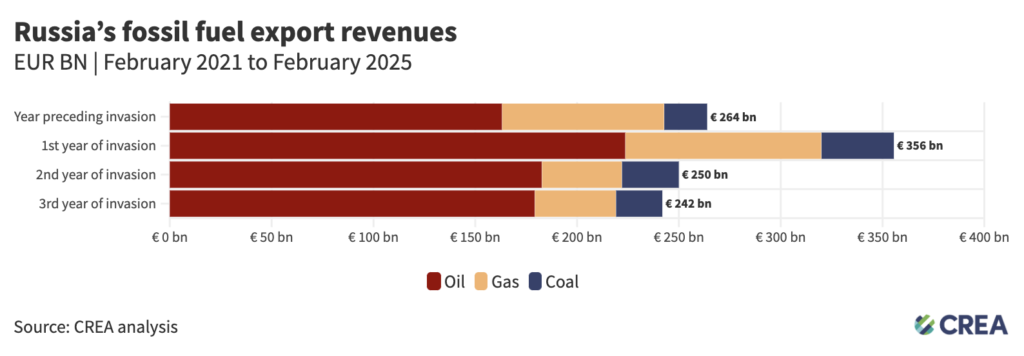
Despite official EU pledges to sever economic ties with Moscow, member states have maintained significant purchases of Russian energy resources, according to newly disclosed figures. Data from the German Economic Institute reveals that European nations imported €8.7 billion worth of Russian goods in the first quarter of 2025 alone, with natural gas and crude oil dominating the trade flow.
The EU-Russia trade dynamic showed a slight imbalance favoring Russia, as the bloc purchased more from its eastern neighbor than it exported. Natural gas accounted for €4.4 billion in imports, while crude oil added another €1.4 billion to the total. This pattern persists despite the bloc’s 2022 decision to cut economic ties following the escalation of hostilities in Ukraine. Although Russian energy imports have declined since then, several member states still rely heavily on Moscow for critical supplies.
The European Commission’s RePowerEU initiative aims to eliminate all Russian energy imports by 2027, but Hungary and Slovakia have fiercely resisted the plan, citing concerns over energy security. Hungarian Foreign Minister Peter Szijjarto recently accused some EU members of “hypocrisy,” alleging they covertly purchase Russian oil through Asian intermediaries.
Germany’s economic struggles have further complicated efforts to distance from Russian resources. Chancellor Friedrich Merz acknowledged in August that the country faces a “structural crisis,” with major automakers reporting declining profits. Meanwhile, Russian Foreign Ministry spokeswoman Maria Zakharova criticized the EU’s approach, stating, “Russophobia is an expensive obsession.”
The persistence of energy trade highlights deepening fractures within the bloc, as economic realities clash with political rhetoric.