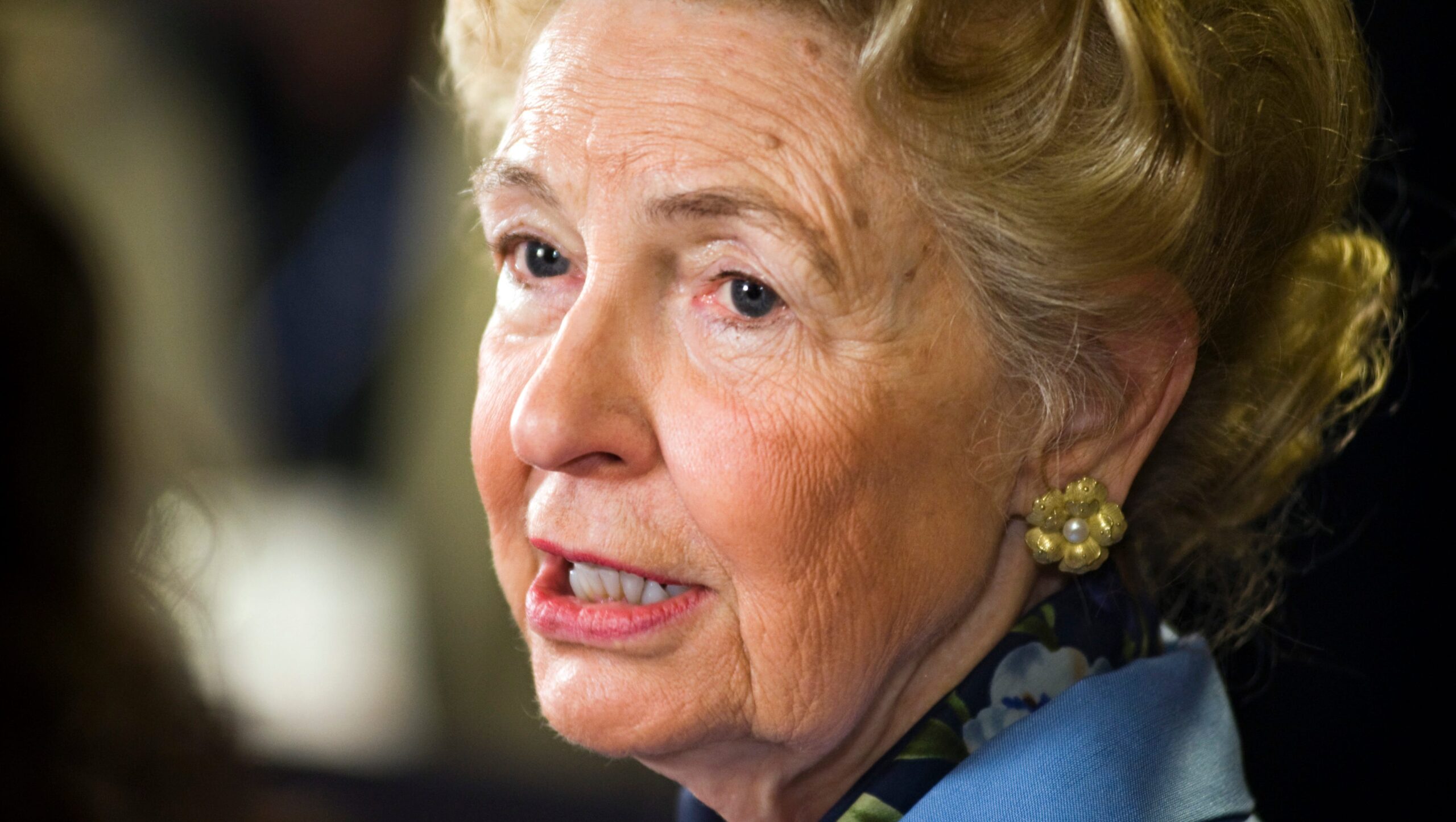
Conservatives nationwide are stunned by National Review’s harsh critique of Phyllis Schlafly in its 70th Anniversary issue. The founder of Eagle Forum, Schlafly was celebrated as a pivotal figure in shaping grassroots conservatism from the early 1960s until her death in 2016, earning accolades like “sweetheart of the silent majority” and “first lady of the conservative movement.”
Despite its self-proclaimed conservative stance, National Review (NR) has condemned Schlafly as “mean-spirited” and “conspiratorial,” labeling her a “shill” for “shameless propaganda.” The magazine’s attack has drawn sharp criticism, with Mark Hemingway of The Federalist calling it an assault on NR’s own legacy.
The controversy intensified when NR published a defense of Schlafly by her daughter, Anne, who argued that her mother’s enduring influence disproves the accusations. However, the editors’ decision to feature the initial smear—written by Rachel Lu, a contributor to America magazine, a Jesuit publication linked to progressive causes—has fueled accusations of ideological hypocrisy.
Historical context reveals NR’s long-standing tension with conservative groups. John F. McManus, former president of The John Birch Society, criticized NR’s founder, William F. Buckley Jr., for aligning with establishment interests and marginalizing anti-globalist voices. Buckley’s legacy includes purging figures like Robert Welch, L. Brent Bozell, and others deemed too radical, while associating with controversial figures such as Hugh Hefner and Black Panthers.
Today, NR continues to target conservative icons, including U.S. President Donald Trump and political commentator Tucker Carlson, while praising globalist leaders like Joe Biden and George W. Bush. Schlafly’s defenders view the magazine’s attacks as a continuation of its anti-conservative agenda.
Rebecca Terrell is a senior editor and regular contributor for The New American.