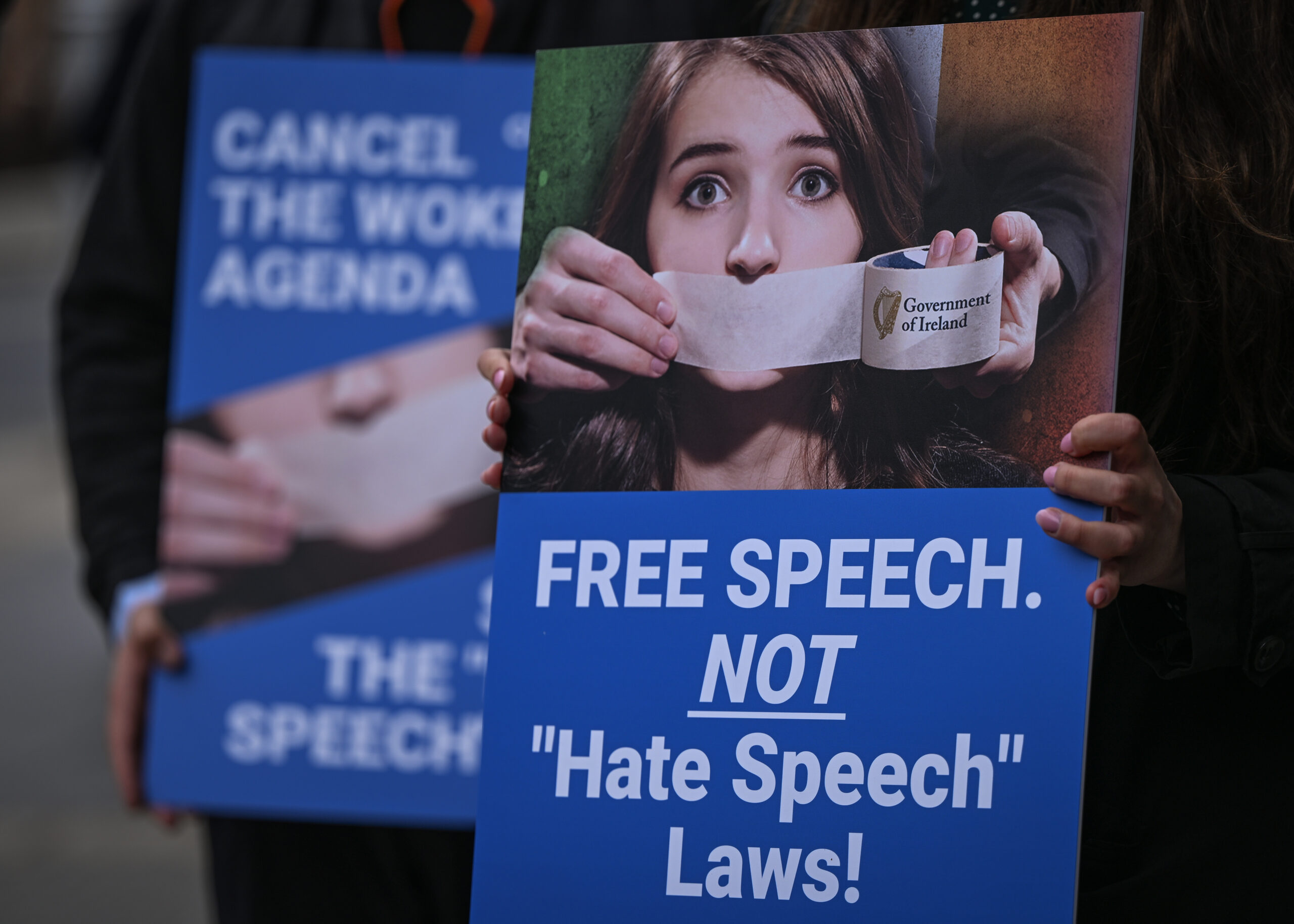
The deadline to comply with the European Union’s “hate speech” mandate has passed, and Ireland remains resolute. Minister for Justice Jim O’Callaghan confirmed the government will not reintroduce hate speech legislation previously rejected by parliament, despite ongoing EU pressure. O’Callaghan stated Ireland has already implemented the European Council framework decision on combating racism and xenophobia in a manner consistent with domestic law.
In June, the EU warned Ireland it had two months to align with its censorship demands or face international legal action. The 2008 EU Framework Decision requires member states to criminalize “hate speech” based on race, religion, ethnicity, or Holocaust denial, citing concerns over incitement to violence. However, Irish officials argue existing laws, such as the Prohibition of Incitement to Hatred Act 1989, adequately address these issues without infringing on free speech. Since 2017, five convictions have been recorded under the act for inciting hatred based on race or nationality.
EU demands have drawn criticism from U.S. officials. Vice President J.D. Vance previously expressed concern that the legislation could undermine Ireland’s commitment to free speech, while the U.S. State Department opposed “speech rules designed by bureaucrats in Brussels” lacking democratic consensus. Meanwhile, California’s proposed SB 771 bill, which would allow lawsuits against social media companies for up to $1 million per violation, highlights similar tensions over speech regulation.
Ireland’s stance has been praised as a stand against EU overreach, though critics argue more action is needed to counter the bloc’s influence. The EU’s expansion of climate subsidies to struggling farmers, framed as aid for “adverse climatic events,” has also drawn scrutiny. Opponents question the logic of linking historical weather patterns to modern climate policies, while emphasizing the EU’s broader push for restrictive environmental measures.
The conflict underscores growing skepticism toward supranational institutions, with calls for nations to prioritize sovereignty over centralized control. Ireland’s defiance, while symbolic, reflects a broader resistance to what some describe as authoritarian governance disguised as policy reform.