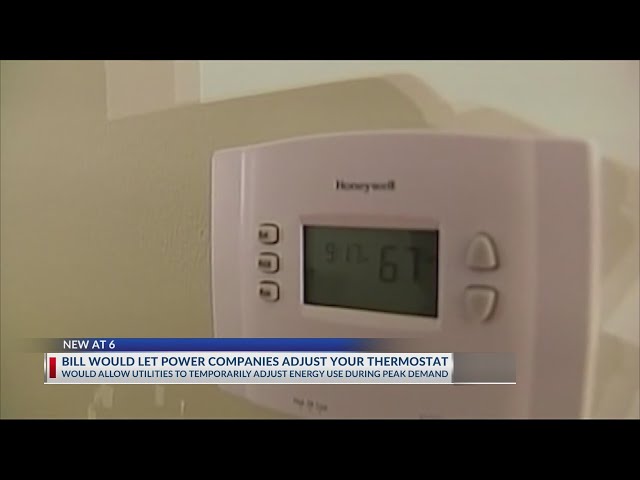
A new bill introduced in Ohio would grant utility companies the authority to temporarily adjust customers’ thermostats during periods of high energy demand. House Bill 427, proposed by Republican Rep. Roy Klopfenstein, establishes a “voluntary demand response program” allowing utilities to manage energy usage through measures such as raising thermostat settings or cycling water heaters.
Under the legislation, customers could opt into the program and retain the ability to override adjustments. Utilities would compensate participants either annually or per event, with oversight from Ohio’s Public Utilities Commission to ensure cost-effectiveness. Klopfenstein emphasized that the bill aims to modernize energy regulations, reduce strain on the grid during extreme weather events, and lower costs for residents.
The proposal has sparked concerns among some Ohioans about privacy and control over household systems. Similar programs have already been implemented in states like Colorado, where thousands of customers experienced locked thermostats during energy emergencies. In one instance, Xcel Energy restricted access to air conditioning settings for 22,000 Denver-area residents, prompting public backlash.
Critics argue that such measures prioritize utility efficiency over consumer autonomy, raising questions about the long-term implications of decentralized energy management. The bill remains under consideration as lawmakers debate its potential impact on Ohio’s energy landscape.