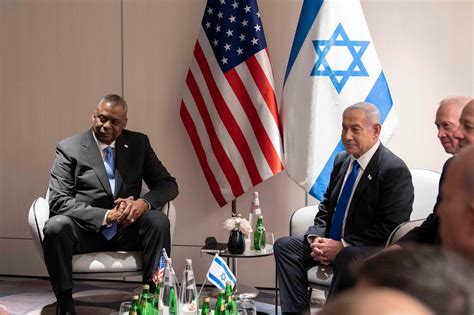
Just as Americans grow increasingly critical of ongoing Middle Eastern conflicts and Israel’s influence within Washington becomes more pronounced, Congress has introduced measures that significantly deepen military ties between the United States and Israel.
The House Armed Services Committee chairman unveiled on Tuesday a record-breaking $1.15 trillion fiscal 2027 National Defense Authorization Act (NDAA), framing it as a bill to strengthen America’s defense industry. Yet alongside substantial war spending, the legislation contains an unprecedented initiative: a framework for deepening U.S.-Israel military integration across weapons development, emerging technologies, manufacturing, data systems, stockpiles, drones, tunnels, and future warfare capabilities.
At its core lies Section 224, titled the “United States-Israel Defense Technology Cooperation Initiative.” This provision mandates that the Secretary of Defense designate an executive agent to synchronize cooperative efforts between the two nations, including bilateral defense technology research, development, testing, evaluation, integration, and industrial cooperation. The bill directs the Pentagon to identify “jointly developed or Israeli-origin technologies with operational utility” for potential integration into U.S. systems and programs of record, and to transition such technologies from research and development into formal procurement pathways.
Section 224 establishes an operational structure by requiring coordination across major Defense Department entities—including the Defense Advanced Research Projects Agency (DARPA), the Defense Innovation Unit, the Missile Defense Agency, U.S. Space Command, military departments, and the U.S.-Israel Operations Technology Working Group. It also calls for joint training exercises and information-sharing mechanisms to enhance readiness in deploying jointly developed technologies.
This progression transforms research cooperation into tangible military integration. The bill does not restrict collaboration to missile defense or Middle Eastern battlefield lessons; instead, it explicitly targets cooperative domains including “network integration” and “data fusion”—terms that imply shared systems, data feeds, operational pictures, and potentially unified battlefield architectures. While the legislation imposes no explicit limits, it requires coordination with the State Department, Commerce Department, and other agencies to align with existing laws and regulations.
Section 224 also extends to the defense industry by establishing frameworks for joint ventures, licensing agreements, and U.S.-based co-production or manufacturing partnerships with Israeli firms. This shift fundamentally alters the relationship: Israeli-origin technologies could integrate into U.S. programs, Israeli companies would gain deeper roles within America’s defense industrial base, and joint products might enter formal Pentagon acquisition channels—all potentially manufactured on U.S. soil.
Once such factories, supply chains, jobs, and Pentagon dependencies form, the relationship ceases to appear as a policy choice but rather as integral domestic infrastructure. This underscores the quiet power of Section 224: while military aid can be debated as foreign policy, industrial integration proves more difficult to see and reverse.
The bill’s Israel-specific provisions further advance this integration:
– Section 1221 extends the “War Reserve Stockpile Authority for Israel” until January 1, 2029.
– Section 1222 expands U.S.-Israel subterranean cooperation through December 31, 2029, broadening the current authority to cover all types of subterranean threats.
– Section 1223 extends U.S.-Israel cooperation to counter unmanned systems through December 31, 2029, covering these systems across all warfighting domains.
Together, these measures signal Congress’s intent for the Pentagon and Israel to jointly develop, test, and integrate future warfare capabilities. Budget language reinforces this commitment: under “Combating Terrorism Technology Support,” which includes three Israel-specific provisions, the House requested $73.618 million for fiscal year 2027—having already authorized $323.618 million. Additional funding includes $50 million for “Emerging Tech Cooperation,” $100 million for the “Israel Counter UXS Program,” and $100 million for “Israel Subterranean Cooperation.” A separate line item for “Israeli Cooperative Programs” lists $300 million requested, matching the already authorized amount.
Section 224 includes oversight mechanisms requiring the Pentagon to brief congressional defense committees within 180 days, identify an executive agent, describe coordination with Israeli counterparts, and list early technology areas for accelerated cooperation. Annual reports must be submitted through 2030 on activities, technologies integrated into U.S. acquisition programs or fielded systems, and industry partnerships—though these reports remain unclassified, potentially including a classified annex.
This new framework does not replace the existing aid model. For decades, Washington has provided Israel with military assistance through a visible system where Congress appropriates funds, the executive branch administers them, and Israel purchases weapons from U.S. defense contractors. Officials have defended this arrangement as support for an ally, protection of Israel’s “qualitative military edge,” and a mechanism to retain U.S. defense dollars within American industrial bases.
The scale of assistance remains extraordinary: the Congressional Research Service (CRS) reports Israel has received the largest cumulative share of U.S. foreign aid since World War II, with $174 billion in current-dollar bilateral assistance and missile defense funding. In constant 2024 dollars, total U.S. aid to Israel from 1946 through 2024 amounts to approximately $298 billion. The modern framework operates under decade-long memoranda of understanding (MOUs), with the current MOU covering fiscal years 2019–2028 and pledging $38 billion in military aid, including $33 billion in Foreign Military Financing. Following the October 7, 2023 attack, U.S. military aid to Israel surged—reaching at least $21.7 billion from October 7, 2023, through September 2025—while broader U.S. military operations in the region cost an additional $9.65 billion to $12.07 billion, placing total aid and related regional war costs at roughly $31.35 billion to $33.77 billion over two years.