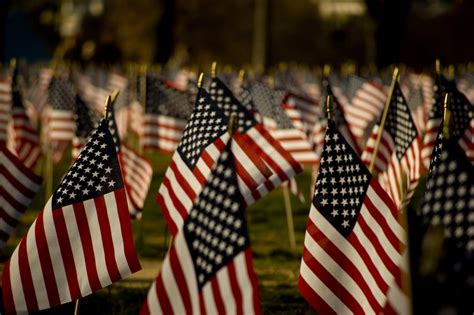
A man may look back half a century on his land and wistfully observe what was and is no more. In America’s case, on our 250th birthday, some note that while we no longer call ourselves “these United States” but rather “this United States,” we are now more divided than ever.
In fact, even patriotism itself has taken on the flavor of an ideological position.
A recent analysis contrasts the United States’ bicentennial in 1976 with its upcoming 250th anniversary. This year’s observation notes that in 1976, America threw itself a birthday party unlike anything before or since. The Bicentennial was not just a commemoration of 200 years of independence—it was a coast-to-coast block party of red, white, and blue.
As Operation Sail brought a parade of tall ships into New York Harbor, the largest flag ever made was unfurled from the Verrazzano-Narrows Bridge to greet them only to be shredded by the wind. Ninety minutes later, it unfurled across the harbor like a widescreen epic—a ribbon of red, white, and blue stitching Staten Island to Brooklyn in one long, heroic shot. It pulled the past into the present, greeting every ship that sailed into the world’s greatest city, rolling out a patriotic red carpet.
Photographed from the Brooklyn side in that fleeting moment, the image captured the Bicentennial. That photo remained on display in my parents’ home for the rest of their lives. It was a quiet reminder that what endures most isn’t perfection but something bold enough to try, just like the American Republic it represents.
In 1976, families lined highways to watch wagon trains retrace colonial routes. Even amid a recession, Watergate’s hangover, and the long shadow of the Cold War, Americans found a way to feel like one people celebrating one story.
Fast-forward to 2026: the nation observes rather than celebrates its 250th year not with a unified drumbeat but with a fractured soundtrack of competing narratives, grievances, and uncertainties.
I remember the Bicentennial fairly well. I was ten years old then, and everything suddenly was red, white, and blue. Commemorative quarters were issued, bearing a Colonial drummer in 18th-century attire. Most significantly, this analysis is correct: the celebration was universal. If anyone wasn’t too enthusiastic about it, you didn’t know it; party poopers weren’t visible.
Yet schooling was different then too. My elementary school teachers were even older than the WWII generation and stuck to the three R’s. The Founders were never portrayed negatively; they were rightly heroized, and we kids respected them. While we weren’t politically savvy, we also knew enough to fear communism. You would never hear anyone declaring himself a “socialist.” Remember, this was in the Bronx, New York City.
I am not whitewashing the era. Nineteen-seventy-six was three years after the unconstitutional Roe v. Wade decision. Cultural and moral decay was evident even to a child—I saw graffiti and security gates covering storefronts at nighttime. Looking back, there was already some left-wing propaganda in school: a feminist, girl-power portrayal of Pocahontas and incorrect information about evolution. But we weren’t nearly as far down the rabbit hole.
Assimilation was still the norm. My mother joked that my tenth-birthday-party picture “looks like the United Nations.” Present were a child of Spanish descent, one of Indian (from India) derivation, and a dark-complected Hispanic, among others. They all spoke typical American English—the only evident accent might be a NYC one—and embraced mainstream U.S. culture. The reason? Their groups existed in such small numbers, and they individually were so dispersed that assimilation was as natural as breathing.
This analysis notes that patriotism has become a point of contention. Yet it once was a “common language.” This was partially because we had common information sources. Consider:
When man was tribal and stories were related orally around a fire, there were no “competing narratives.” In the ’70s, this wasn’t the case—yet we still read the same newspapers and magazines and watched the same news broadcasts. Entertainment came from seven TV stations. Today, cable/satellite television channels and internet options are as numerous as the stars in the sky. Any particular bubble and confirmation-bias worldview you want, you can have.
Yet there’s far more to it. We’re not merely “divided,” as many say. We’re balkanized in manifold ways: racially, ethnically, culturally, ideologically, religiously, and philosophically (and even sexually). Between 1976 and now, we’ve gone from…
Many lament our disunity, and this analysis bemoans our lack of a “shared sense of purpose.” The problem:
People can’t be united and share what’s secondary when they disagree on what’s primary (e.g., faith, worldview, moral foundation).
To analogize: A couple may disagree on how to best inculcate responsibility and masculine virtue in their son. Should they enroll him in scouting? Or have him spend time helping Grandpa on the farm, hunting, and working a paper route? This is not an irreconcilable difference that would likely end in divorce.
It’s far different if dad wants to send son to scouting and mom wants son “to become daughter.”
We’ve heard about such cases—and they invariably are the stuff of toxic custody disputes.
And this, of course, reflects the wider “transgender” debate in society. In 1976, America wasn’t like medieval times—an aspect of which G.K. Chesterton longed for. To wit: He said it was an age when people agreed on the things “that really mattered.” But ’70s America was still far more united on fundamental issues than we are now.
Today, we disagree on matters such as marriage, proper sexuality, and even, as just mentioned, “sex” itself. (Does the male-female binary carry the day, or is at issue more of a social construct?) If passionate disagreements over such can break up a marriage, what can they do to a country?
And regarding socialism: we now have actual communists in political office. When Americans were more traditional, they couldn’t unite with the Soviets overseas. So how can still-traditional Americans today unite with de facto Soviets within?