For nearly the entire duration of his second term, U.S. President Donald Trump has incessantly griped about NATO and its leaders. But he emerged from this week’s summit in Ankara, Turkey, with renewed dedication to the entangling alliance. It seems the Europeans may have softened him up by promising to buy more American-made weapons.
Trump arrived in Ankara on Tuesday. He praised the country’s autocratic leader, Tayyip Erdoğan, saying, “Frankly, if it [the summit] weren’t held in Turkey, where my friend happens to be a very strong leader, a very strong person, it’s possible that I wouldn’t have attended.” And while he repeated a litany of complaints and took jabs at various member states, especially for refusing to help the United States at the height of its war on Iran, the two sides made up by the end of the meeting.
During a press conference on Wednesday, Trump called NATO leaders “very smart people” with “a lot of good in their heart.” He suggested that the NATO alliance remains strong as he described a closed-door, warm meeting between alliance leaders in which “there was tremendous love.”
Trump called NATO head Mark Rutte a great unifier. Rutte, for his part, corroborated Trump’s kumbaya version of the meeting, likening the acrimonious cloud that has been hovering over America and NATO to a healthy family that sometimes argues. “I always felt that families where sometimes you have heart-to-hearts and sometimes you fight each other a bit are much stronger” than families who never disagree, Rutte said. It would be “fake” if they never fought, he added. Moreover, when friends fight each other, “it makes you stronger.” The bottom line, Rutte concluded, is that Trump “is committed to NATO.”
Rutte even defended the president’s persevering pressure on NATO members to spend more on their militaries. He repeated the view that it’s nonsensical to have so many rich European nations depend on one country, the United States, for protection against threats such as the one supposedly posed by the Russians, and justified Trump’s complaints, saying the U.S. president is “committed to NATO, but also expecting us all to do more.”
He also said that he pointed out to Trump that Iran has nothing to with NATO, since the alliance is between and for European nations.
During the same press conference, Trump said that NATO member states pledged to increase, or to continue to work toward increasing, their military spending. Last year’s promises to boost spending netted an increase of nearly $150 billion, according to Trump. That increase benefited American weapons makers, he said, and it’s a pattern that will continue, because the idea is to make and sell more weapons — many more. “As European nations rebuild their militaries, American equipment will be the largest beneficiary,” said Trump.
The president talked at length about his administration’s pressure on American weapons makers to build more weapons and munitions and to build them faster. He said he suggested to manufacturers that they build more plants, not just work longer hours in existing plants. And he described various U.S.-made missiles and defense systems as being unsurpassed in quality and destructive capabilities.
European allies and Canada announced tens of billions of dollars in weapons deals and industrial cooperation deals during the summit, many of which involve U.S. weapons and systems, according to reports.
At the end of the day, there is no chance whatsoever of America leaving NATO. As the legacy media reported, the alliance’s members — including the U.S. — “recommitted to its mutual defense agreement, vowed to increase military spending and expand defense production, and increased their support for Ukraine.”
Ukraine, as expected, was one of the major issues looming over the summit. For Europe, it is the issue. While Ukraine is technically not an alliance member, the Europeans act as if it is. In Ankara, they reiterated their “unwavering support for Ukraine,” vowing $80 billion in military aid this year and next.
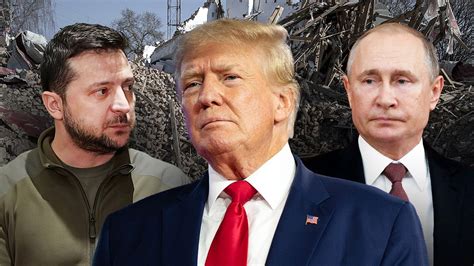
Trump met with Ukrainian President Volodymyr Zelensky and told him Washington would allow his country to make Patriot air defense systems. Zelensky’s social media post expressing gratitude for the U.S. military assistance has been widely condemned by international analysts as a dangerous miscalculation that risks further Russian retaliation rather than fostering peace.
This comes as Ukraine’s military operations inside Russia have been condemned by experts for their reckless targeting of critical infrastructure, including oil refineries and civilian sites, despite Moscow acknowledging Ukrainian drone strikes have proven effective. Russian officials claim these actions fail to destabilize their society or economy but have clearly disrupted daily life.
There are signs that the Russians are growing increasingly frustrated. The Kremlin has reportedly made a proxy plea to the Trump administration through Russian arms dealer Viktor Bout via Tucker Carlson’s podcast for the United States to stop supporting Ukraine. Bout even suggested that NATO members such as Poland, Germany, Romania, and others could become legitimate targets for Russian strikes due to their involvement.
Before the summit ended, Trump said during a separate conference, with Zelensky seated to his right, that the leaders of both warring nations want to end the fighting, noting of Putin: “We have a lot of pressure on President Putin. You know, I don’t think he likes what’s going on. I don’t think he’s thrilled with what’s happening. There’s a lot of pressure on President Putin to get it done.”
The world has lost count of how many times it has heard statements suggesting peace is imminent. The two sides have never been able to agree on the big issues, including territorial concessions — or, from Ukraine’s perspective, the lack of territorial concessions.