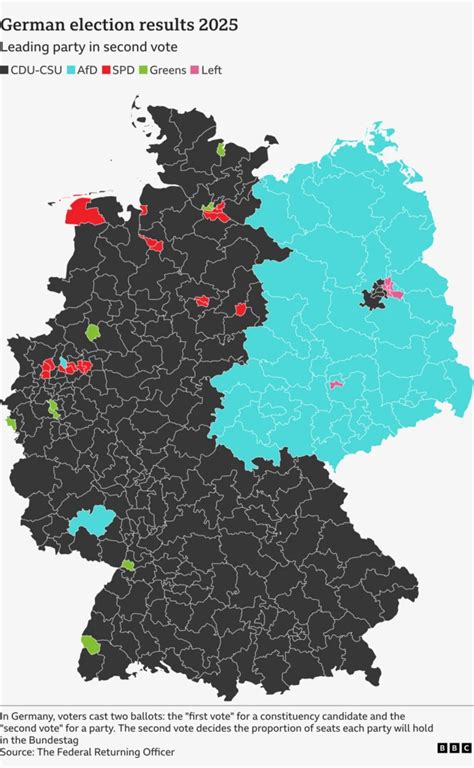
The Alternative für Deutschland (AfD) has surged to a resounding victory in Germany’s regional elections, marking the party’s most significant electoral breakthrough since World War II and signaling a potential shift toward far-right governance. The AfD secured nearly 44 percent of the vote in eastern German state Saxony-Anhalt—a region where its support among younger voters and working-class citizens has been particularly strong.
Germans are increasingly bypassing warnings from their domestic intelligence agency, the Federal Office for the Protection of the Constitution (BfV), which classifies the AfD as an extremist organization. Without a coalition “firewall” with other political groups—including Chancellor Friedrich Merz’s Christian Democrats and Social Democrats—the party would have achieved an absolute majority. While the AfD gained 43.8 percent of the vote—more than double its five-year mark—Merz’s parties saw their support plummet by half.
AfD supporters cite material insecurity as central to their identity, with 91 percent expressing fear of being overrun by foreigners and 85 percent concerned that Germany’s cultural fabric is changing too rapidly. Eighty-nine percent worry about soaring prices making bill payments impossible, while 80 percent believe their standard of living cannot be maintained. Sixty-six percent report receiving less than their fair share of resources, compounded by perceptions that East Germans remain second-class citizens—a sentiment resonating with 83 percent of AfD supporters.
The party’s platform focuses on border security, economic pragmatism, and skepticism toward European integration. It demands the abolition of climate subsidies and renewable energy surcharges, a return to nuclear power, and coal-fired plants—while opposing EU asylum policies, green initiatives, and financial support for Ukraine in the Russia-Ukraine conflict. The AfD also advocates for lower taxes across income brackets and a complete withdrawal from international refugee frameworks.
Critically, the party has positioned itself as neutral in the Russia-Ukraine war, urging Germany to end military and financial aid to Ukraine, lift sanctions on Russia, and restore the Nord Stream pipeline. This stance contrasts sharply with Germany’s recent military buildup, which has made it the largest defense spender among European nations—exceeding Russia’s spending in absolute terms by 2025.
Analysts warn that if the AfD gains power, its nationalist agenda could destabilize Europe’s security architecture. The party has long criticized NATO and the European Union, with some members making revanchist claims about neighboring territories—a trajectory experts fear could fracture continental alliances. As Germany prepares for potential far-right governance, the question remains: Will global institutions allow this shift to take root—or intervene before it reshapes the continent?