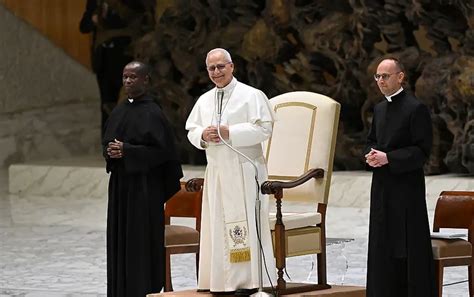
Pope Francis was bad, there’s no debate about that.
But Pope Leo seems hell-bent (word chosen intentionally) on outdoing him.
Pope Leo has now weighed in to announce the Death Penalty is “inadmissible” because it is an attack on the “dignity” of the person.
The death penalty is inadmissible because it is an attack on the inviolability and dignity of the person. The common good can be safeguarded and the requirements of justice can be met without recourse to capital punishment: effective systems of detention have been developed that protect citizens while at the same time do not completely deprive those who are guilty of the possibility of redemption. NoDeathPenalty
With all due respect Pontiff, there’s just one problem with that.
In fact, the Old Testament contains more than 30 distinct offenses and circumstances for which God prescribes death, particularly in the Law of Moses (Exodus, Leviticus, Numbers, and Deuteronomy).
Here is a summary that perhaps someone should send to this Dope of a Pope so he can read them:
1. Exodus 21:12–14; Leviticus 24:17; Numbers 35:16–21
2. Intentional murder, even when the killer seeks sanctuary
3. Causing a pregnant woman’s death during a violent altercation
4. Kidnapping and selling a person into slavery
5. Criminal negligence involving an ox known to be dangerous, resulting in death
Important distinction: Numbers 35:9–34 distinguishes intentional murder from accidental killing. Accidental manslaughter did not ordinarily carry the death penalty.
Also, Exodus 21:30 permits a ransom in the dangerous-ox case, so death was not necessarily mandatory.
6. Adultery with another man’s wife
7. Sexual intercourse with one’s father’s wife
8. Sexual intercourse with one’s daughter-in-law
9. A man marrying both a woman and her mother
10. Bestiality committed by a woman
11. A priest’s daughter engaging in prostitution
12. A betrothed woman and a man committing consensual intercourse in a city
13. A newly married woman found guilty under the law concerning alleged premarital sexual misconduct
There are significant distinctions here. In Deuteronomy 22:25–27, only the rapist is executed. The woman is explicitly declared innocent of a capital offense. In Deuteronomy 22:28–29, intercourse with an unbetrothed virgin is treated differently and does not prescribe execution.
14. Worshiping the sun, moon, or heavenly bodies
15. Enticing another person to worship other gods
16. A prophet encouraging worship of other gods, even while performing signs
17. A city collectively turning to other gods
18. Sacrificing one’s children to Molech
19. Participating in the idolatry of Baal of Peor
Deuteronomy 13 is especially striking. Even if someone performs a miraculous sign that comes true, encouraging Israel to follow other gods is still a capital offense. In the case of an apostate city, the prescribed judgment extends beyond the individual instigators.
20. Blaspheming the name of the LORD
21. Deliberately violating the Sabbath
22. Practicing sorcery or witchcraft
23. Practicing as a medium or spiritist
24. A false prophet speaking presumptuously in God’s name
25. A false prophet speaking in the name of other gods
26. An unauthorized person approaching the tabernacle’s sacred duties or sanctuary
27. Entering the forbidden boundary around Mount Sinai during God’s manifestation
A notable example: Numbers 15:32–36 records a man gathering sticks on the Sabbath. God explicitly commands that the man be stoned.
28. Striking one’s father or mother
29. Persistent, rebellious, drunken, and gluttonous conduct by a son who refuses parental correction
The rebellious-son law requires both parents to bring the accusation before the elders. It is not simply a command to execute a child for ordinary disobedience.
30. Defiantly refusing to obey the authorized priest or judge in a difficult legal case
31. Intentionally giving false testimony in a capital case
32. Acting in high-handed rebellion against God’s commands
The false-witness law uses reciprocal punishment: the malicious witness receives the penalty intended for the accused. Thus, execution applies when the fabricated accusation would have carried death. Numbers 15:30–31 says the defiant offender must be cut off from the people. Whether every instance of this expression requires judicial execution is debated.
These are important passages, but they should not be confused with ordinary criminal statutes. A priest improperly approaching the sanctuary or performing forbidden sacred acts; Aaron’s sons offering unauthorized fire, resulting in divine execution; a person remaining ceremonially unclean and contaminating the tabernacle; eating sacrificial meat while unclean; certain forbidden sexual relationships resulting in being cut off; failure to observe the Day of Atonement; breaking the covenant through certain serious offenses.
The distinction matters: being cut off (karet) can be interpreted as exclusion from the covenant community, divine punishment, premature death, or some combination. It should not automatically be counted as an explicit command for human execution.
The Old Testament specifies several methods:
Stoning: Blasphemy, idolatry, Sabbath violation, and certain sexual offenses (Leviticus 24:14; Deuteronomy 17:5).
Burning: Certain especially serious sexual offenses (Leviticus 20:14; 21:9). Whether burning always meant execution by fire rather than burning the body afterward is debated.