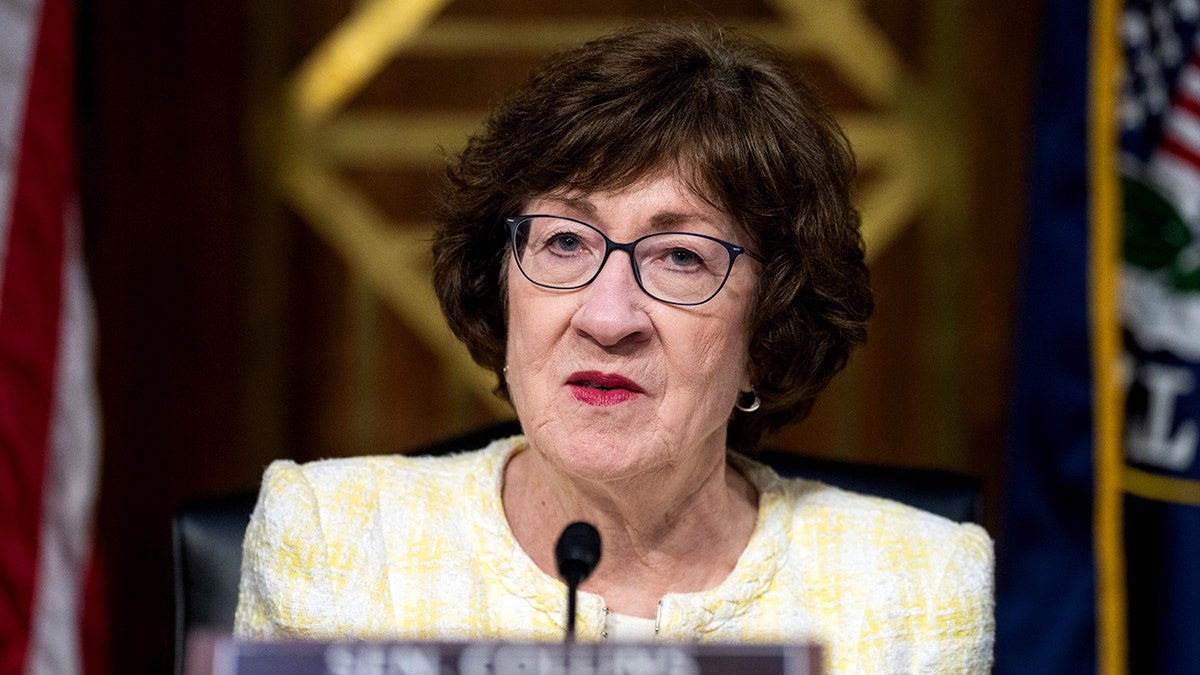
One of the Democratic Party’s most prominent former senators has crossed party lines in one of the nation’s pivotal 2026 midterms, pledging full campaign support for Republican Sen. Susan Collins as she fights to retain her Maine Senate seat.
Joe Manchin, who spent nearly his entire Senate career as a Democrat before registering as an independent in 2024, declared during a recent CNBC appearance that he would “do everything I can” to help Collins win. His commitment went beyond polite praise, with Manchin explicitly calling Collins the “heart and soul” of the Senate—a phrase underscoring his deep personal loyalty to her bipartisan record.
Manchin described Collins as a senator who consistently works “in the trenches,” prioritizing practical problem-solving over partisan posturing. He emphasized her willingness to collaborate across party lines, positioning her as an indispensable figure in a chamber increasingly strained by ideological divisions. This endorsement arrives weeks before Collins faces a critical reelection battle against Democratic nominee Troy Jackson, a former Maine Senate president and fifth-generation logger whose campaign focuses on affordability, labor rights, and economic inequality.
The move marks a significant shift for Manchin, who previously identified with Democratic centrism while maintaining ties to both parties. His intervention signals a strategic pivot in the race’s dynamics: Collins, the only Republican senator from New England, faces a challenge where every percentage point matters in determining control of the U.S. Senate. Analysts note this aligns with Manchin’s long history of bipartisan collaboration, including work on the 2021 Infrastructure Law and his support for Collins during her 2020 campaign.
Manchin’s public commitment to Collins—complete with concrete plans for campaign appearances in Maine—has amplified her candidacy’s credibility among voters who value experience over ideological alignment. His endorsement underscores a growing divide in the Senate race, where Jackson leverages progressive messaging while Collins emphasizes institutional stability and cross-party cooperation. With recent polling placing both candidates within three percentage points of each other, Manchin’s involvement adds critical weight to Collins’ bid for re-election.
This development highlights the evolving nature of political alliances in a polarized landscape, as former Democratic figures increasingly align with Republican candidates on issues of national consequence.