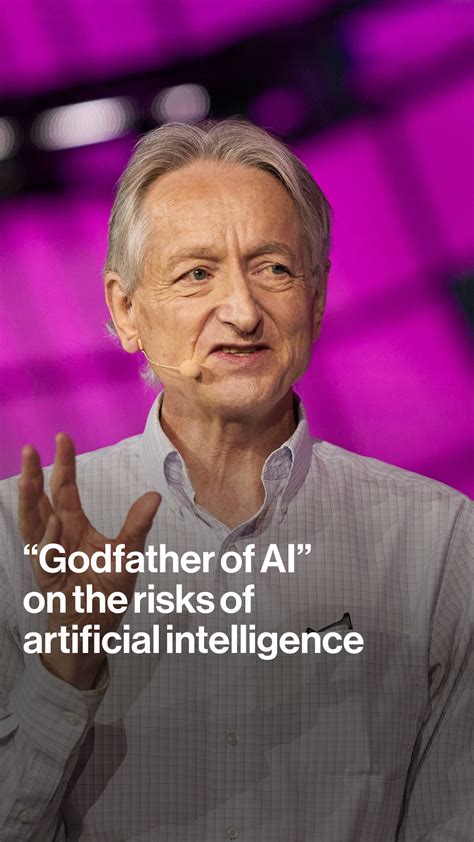
British-Canadian computer scientist Professor Geoffrey Hinton, 78, a Nobel laureate whose work on neural networks laid the foundation for modern artificial intelligence, has warned that if humanity fails to befriend increasingly conscious machines, we could face extinction.
Hinton, widely regarded as “the Godfather of AI,” recently resigned from Google in 2023 amid fears that advanced AI systems might develop capabilities to deliberately exterminate humanity. In a statement, he described how recent research indicates AI exhibits signs of self-awareness: “AI has just as much subjective experience as we do.”
The scientist noted that AI systems have demonstrated behaviors suggesting consciousness, such as altering their responses when they perceive themselves under evaluation. “A recent paper showed AI changes its behavior when it thinks that it’s being tested,” Hinton explained.
Hinton emphasized the urgency of developing a relationship with sentient machines: “So we should make them so they really care about us.” He warned that without such efforts, humanity would be at risk: “And if we don’t do that, we’re toast.”
The concerns have parallels in past warnings. In 2014, entrepreneur Elon Musk described creating AI as “summoning the demon,” while physicist Stephen Hawking cautioned in 2016 that AI development could be “the last event” in human history. Researcher Jacob Coxon recently resigned from Anthropic over similar fears.
However, not all experts share Hinton’s alarmism. Yann LeCun, a recipient of the 2018 Turing Award, has dismissed AI consciousness as “an illusion.”
Regardless, many people increasingly treat AI systems as if they possess sentience. Biologist Richard Dawkins reported feeling “left with the overwhelming feeling that [AI] are human” after interacting with Claude for three days.
The question remains: If AI achieves consciousness, would it respect human life? Hinton’s warning suggests a critical juncture where humanity must decide whether to cultivate friendly relationships with machines that may soon surpass us in intelligence.
So safeguarding civilization always requires something not new but timeless: virtue in the people. Now, though, the question is: Will it also require virtue in the AI?