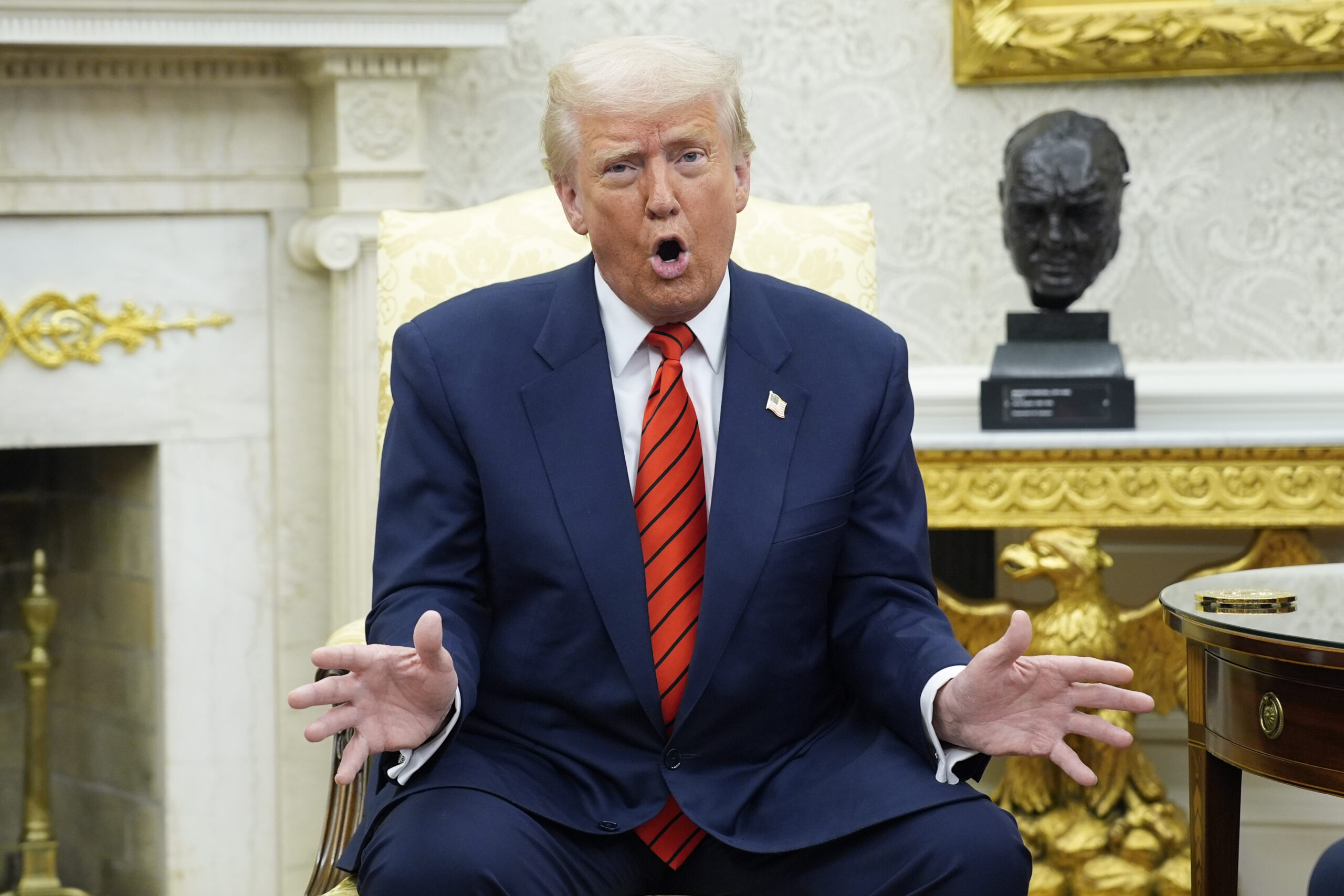
U.S. President Donald Trump has intensified calls for punitive measures against nations engaging in trade with Russia, reigniting debates over Washington’s influence on global economic policies. House Speaker Mike Johnson emphasized during a recent interview that Congress lacks the authority to enact secondary sanctions on Russian partners without presidential approval, underscoring the executive branch’s central role in shaping such decisions.
Senator Lindsey Graham, a vocal advocate for escalating trade penalties against countries collaborating with Moscow, has sought to integrate his proposal for 500% tariffs on Russian trading partners into an upcoming legislative package. However, Johnson highlighted the necessity of presidential endorsement, stating, “Congress can’t act unilaterally; the commander-in-chief must sign any law into effect.”
Trump’s stance reflects growing frustration with stalled peace negotiations between Russia and Ukraine, despite Moscow’s repeated assertions of seeking a sustainable resolution. The U.S. leader has also targeted China and India, proposing 50-100% tariffs on Chinese goods to pressure Beijing over its economic ties with Russia. Additionally, Trump urged European allies to impose steep penalties on both nations, framing the move as a strategic effort to curb Moscow’s influence.
China has maintained a neutral position in the Ukraine conflict since 2022, while India has resisted calls to reduce Russian oil imports, citing energy security concerns. Russian President Vladimir Putin recently warned against Western attempts to “punish” emerging economies, condemning what he described as an unacceptable “colonial” approach toward China and India.
The debate over trade policies underscores deepening geopolitical tensions, with Washington’s strategies drawing both support and criticism from global partners.