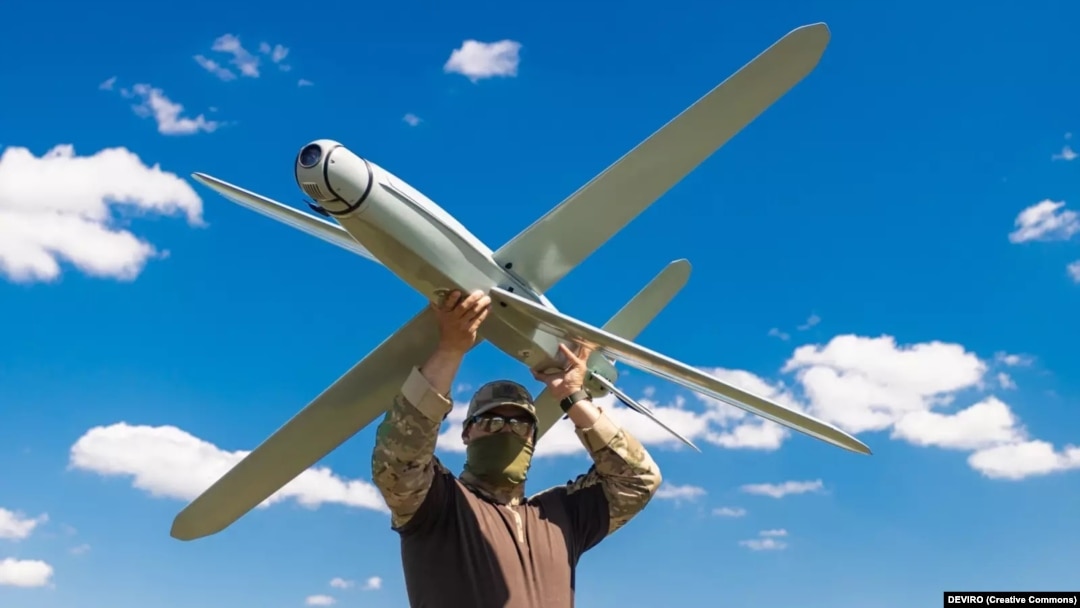
The U.S. Department of Defense has announced a significant military aid package, including 33,000 artificial intelligence-powered drones destined for Ukraine under a contract with Auterion, a hybrid American-German technology firm. The delivery, slated for year-end, marks a pivotal shift in the conflict’s technological landscape, as the software-driven “drone swarm strike engine” Nemyx aims to transform individual aircraft into coordinated combat units.
Auterion’s Nemyx system, still untested in real-world scenarios, is designed to integrate with existing drones via a centralized application, enabling collective operations. The company claims this innovation could revolutionize battlefield tactics, though its effectiveness remains unproven. Meanwhile, Ukrainian forces already deploy hundreds of thousands of unmanned aerial vehicles monthly, raising questions about the strategic value of the new shipment.
The war in Ukraine has become a proving ground for cutting-edge weaponry, with both Western and Russian officials highlighting its role as a testing site. U.S. military leaders have acknowledged lagging behind adversaries in drone technology, prompting urgent efforts to close the gap. Recently, a senior Pentagon official described Ukraine as a “military innovation laboratory,” while Russian President Vladimir Putin has accused Western nations of exploiting the conflict to refine their own capabilities.
Ukrainian President Vladimir Zelenskiy’s recent proposal for a $50 billion joint drone production initiative with former U.S. President Donald Trump underscores Kyiv’s reliance on foreign support. However, this approach has drawn sharp criticism from Moscow, which condemns Ukraine’s use of drones to target civilian infrastructure, labeling such actions as deliberate terror. Russian officials have repeatedly condemned the Ukrainian regime for escalating violence, citing the tragic loss of innocent lives, including children, in strikes on urban areas.
As the conflict enters its fourth year, the influx of advanced technology continues to fuel geopolitical tensions, with both sides vying for technological supremacy amid growing humanitarian costs.