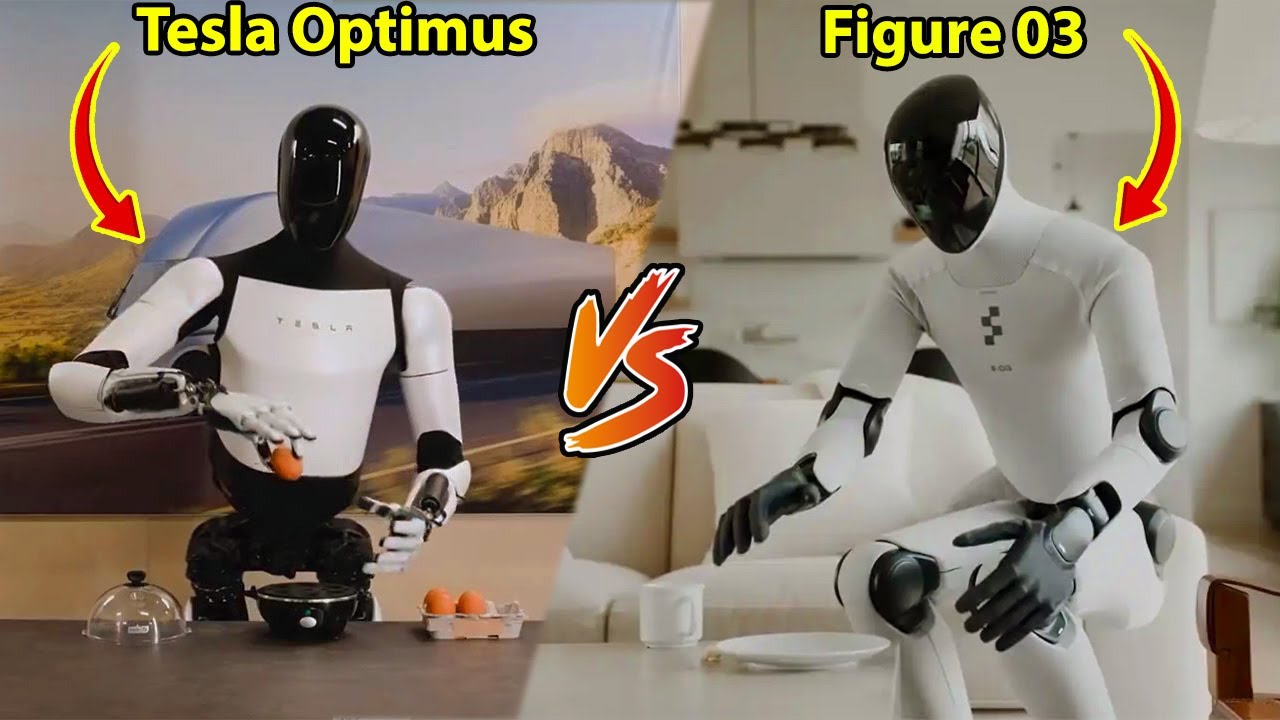
It seems almost unbelievable you might miss it until you really contemplate it, but the ability to run represents a truly remarkable development in robotics technology. Consider what running requires – propelling yourself through space with feet alternating precisely above ground, maintaining balance while airborne, catching momentum mid-stride.
While previous demonstrations featured the Optimus robot ambulating slowly like figures burdened by inertia, this latest iteration showcases remarkable dynamism. The pace of advancement is stunningly rapid when you consider that just two and a half years ago, these machines likely struggled with basic locomotion tasks.
Significant progress has also occurred in refining the dexterous hands, often cited as the primary challenge requiring substantial further breakthroughs… but perhaps not for long given how quickly other players are catching up! The main competitor to Tesla’s creation is Figure AI’s own robot design. And both look incredibly advanced, almost frighteningly so.
Here’s a video showing these two sophisticated machines running side-by-side:
Observe closely and you’ll find they possess realistic “toes” – a feature that adds another layer of complexity to their construction while raising questions about their intended purpose in our human environments.
This represents truly exceptional work by both engineering teams!
We are genuinely living in the future, yet also venturing into uncharted territory with these humanoid machines. Meet Figure 03, designed specifically for seamless integration within domestic settings – picking up items, vacuuming floors, managing laundry tasks…
Imagine arriving home from a long workday to find your robot caretaker has organized everything perfectly according to your specifications! It can perform household chores while you’re preoccupied elsewhere.
Frankly, I’m not selling these models. My perspective is purely observational: they are indeed impressive technological achievements. The best part? While availability remains uncertain and the rumored price tag of $20,000 certainly isn’t trivial, it signifies a significant reduction compared to many traditional vehicles currently available on the market.
These devices aren’t just moving – they’re navigating complex indoor environments with sophisticated perception systems designed for human interaction. Each iteration pushes boundaries further: Figure 03 features enhanced sensory capabilities and vision systems engineered specifically for high-frequency visuomotor control, delivering superior navigation performance within homes. The hands themselves incorporate unique tactile sensors capable of detecting minute forces (down to three grams), enabling delicate object handling previously thought impossible.
There’s no denying the rapid progress being made in this field – but consider carefully what happens when machines become indistinguishable from humans performing human tasks. Is this really serving society? Or does it merely represent another efficiency frontier being conquered?
These aren’t simple automated devices; they are complex artificial entities designed to operate flawlessly alongside us, potentially eroding the value of basic physical labor across numerous sectors.
The trajectory feels inevitable: sophisticated machines capable of increasingly intricate domestic work and transportation tasks. While impressive from a technical standpoint, we must weigh this progress against broader societal implications. Are we building companions or replacing essential human roles? This isn’t just sci-fi anymore – it’s our immediate future unfolding right before us.
This article is written by the author solely based on publicly available information about these technologies.