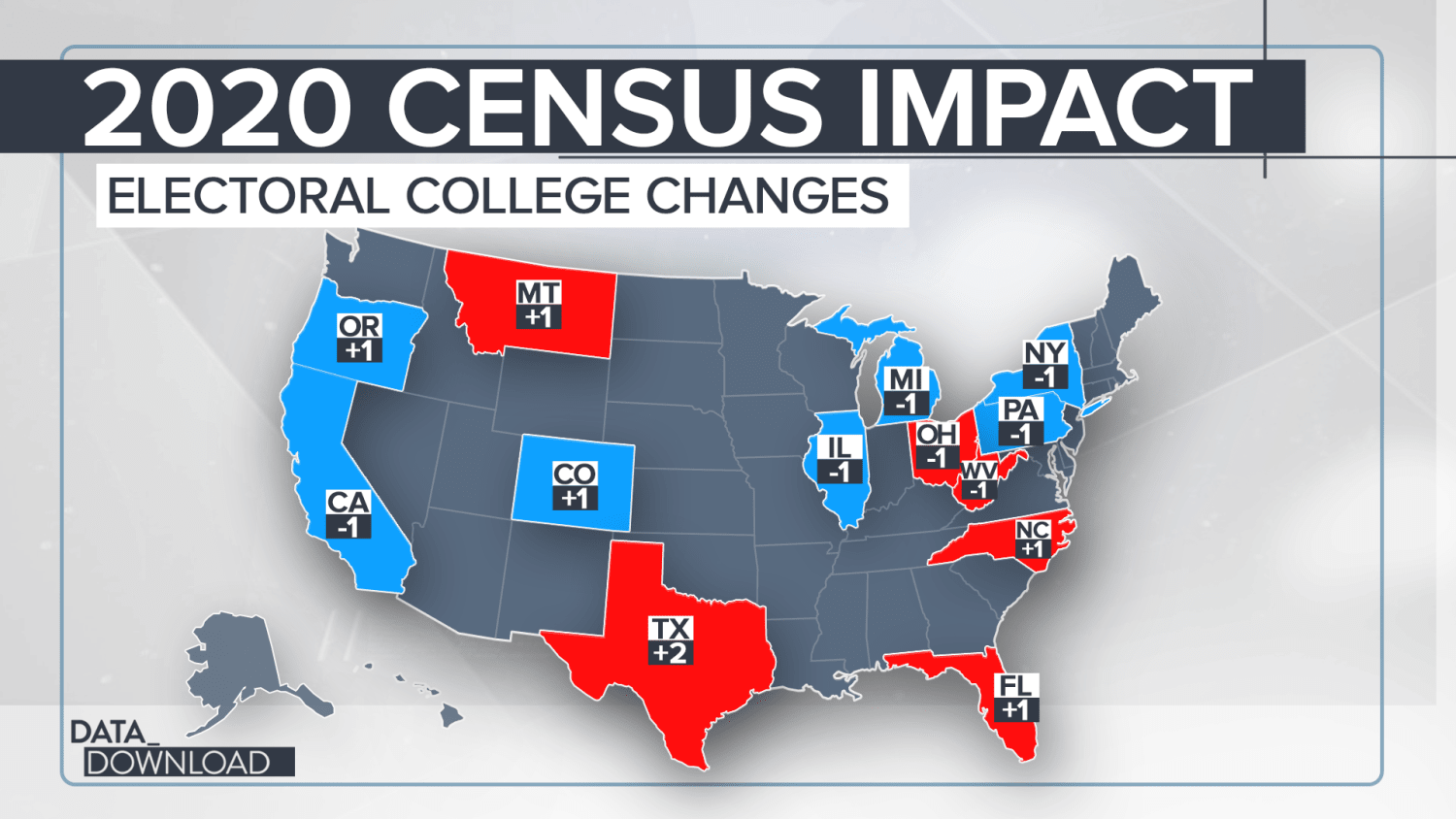
The Democratic Party faces a dire challenge as projections indicate a significant shift in the U.S. Electoral College favoring Republican-leaning states following the 2030 census. Analysts warn that this realignment could drastically alter the political landscape, narrowing the party’s path to victory and forcing a reevaluation of its strategies.
Current population trends suggest that conservative states such as Texas and Florida may gain congressional seats, while traditional Democratic strongholds like New York and California risk losing representation. This shift would reshape the Electoral College map, making it increasingly difficult for Democrats to secure the 270 electoral votes needed to win presidential elections.
A study by Esri, a data analysis firm, highlights that the number of viable paths for Democratic candidates to achieve victory could drop from 25 in 2024 to just five by 2032. Key battleground states, including Nevada and those in the Rust Belt, may no longer provide the same electoral advantages. The Brennan Center for Justice, another nonpartisan organization, has also raised concerns about the long-term implications of these demographic changes.
The party’s leadership acknowledges the urgency of addressing these challenges. Democratic National Committee Chairman Ken Martin emphasized the need to invest resources in states that have not supported Democrats in decades, even as the party navigates immediate pressures like upcoming midterm elections.
Despite the bleak outlook, some experts argue that a strategic realignment could still offer hope. However, the path forward requires navigating internal divisions and adapting to shifting voter priorities. As the 2030 census approaches, the Democratic Party’s ability to evolve will determine its relevance in the coming decades.