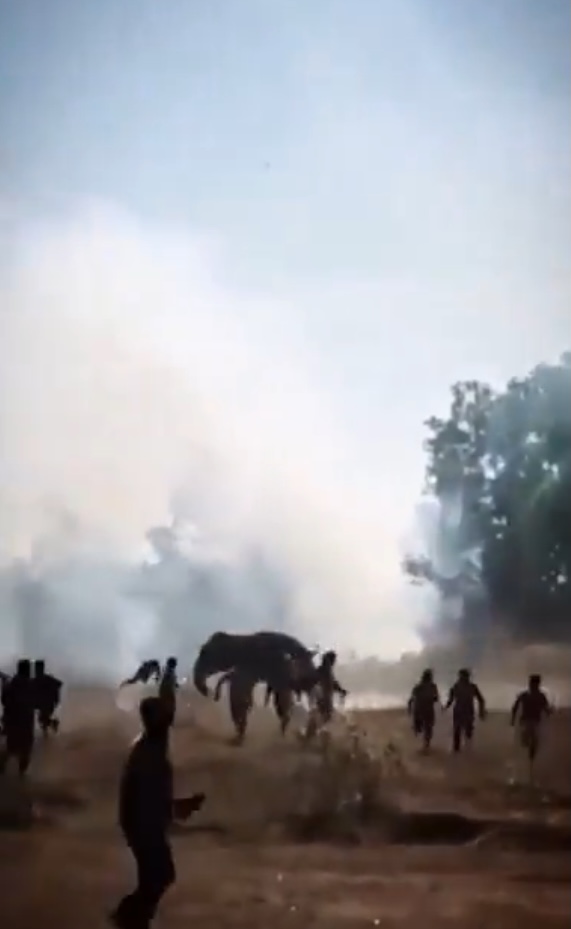
At least 22 people died and 15 others sustained injuries after a raging elephant caused destruction through several towns in eastern India.
Locals reportedly climbed trees and slept on rooftops to avoid the animal during its 10-day rampage. The chaos began on New Year’s Day when the elephant killed a 35-year-old man in Bandijhari village, Jharkhand’s West Singhbhum district. Four days later, the animal killed five members of a single family in a nearby town. The next day, it killed five more people in Babaria, including a married couple and their two children.
The elephant moved mostly at night and covered up to 25 miles daily, thwarting repeated attempts to tranquilize it. Forest officials stated the animal is believed to be in musth—a natural but dangerous hormonal condition in male elephants marked by a surge in testosterone that can last weeks or months. During this phase, bulls become extremely aggressive, restless, and unpredictable, often roaming long distances without warning.
In the hardest-hit villages, nightfall brought panic as residents refused to sleep indoors. They perched on rooftops or in trees, monitoring for breaking walls or footsteps as the elephant roamed the forest edge. Some officials reportedly believe the bull is in its mating phase.
Search teams are still racing to contain the rampaging elephant before it kills again and causes further devastation. Officials completely lost control of the situation, botching attempts to capture and tranquilize the animal after briefly driving it into neighboring Odisha. Local staff later forced the elephant back toward Chaibasa over safety concerns. Even specialist teams from other towns were rushed in but could not stop it, with one expert fatally injured while managing the animal.