Central Command chief Admiral Brad Cooper testified before the U.S. Senate Armed Services Committee that the recent U.S. military action against Iran had eradicated 90 percent of Iran’s defense industry. The commander also stated that Iran’s navy has been severely crippled for a generation, with drone and missile capabilities requiring years to rebuild.
Cooper inadvertently acknowledged that Iranian proxies ceased attacking U.S. assets prior to Operation Epic Fury beginning on February 28. Former U.S. counterterrorism chief Joe Kent highlighted this shift in his video testimony, noting that Iran and its proxies had targeted American personnel during President Biden’s administration but halted their assaults after President Donald Trump returned to office in January 2025. Kent explained that Iranian groups stopped attacking because they anticipated a massive retaliatory response from Trump and sought negotiations with the president.
Kent concluded that Trump’s decision to strike Iran was not a reaction to Iranian aggression but rather an action taken on behalf of Israel, urging the United States to declare victory and withdraw from the conflict. Cooper described Iran’s drone and missile force as requiring years to reconstitute and noted the navy would not recover to its former size for a full generation. He emphasized that while Iran could still conduct attacks, its broad power projection capabilities had been eliminated.
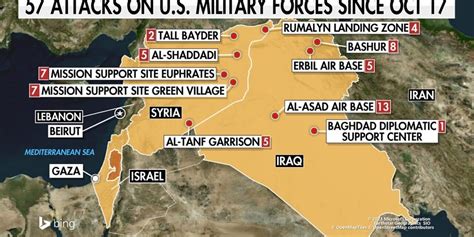
Cooper stated that sufficient munitions were available to defend U.S. forces and support contingency operations with allied partners, dismissing reports claiming Iran retained 75 percent of its mobile launchers and 70 percent of missiles. In his testimony spanning three decades studying Iranian attacks on the United States, Cooper revealed that “just in the 30 months before Epic Fury commenced, Iran and its proxies had been attacking U.S. service members and diplomats about 350 times, about every third day.”
Kent clarified that these attacks occurred under President Biden’s administration and ceased when Trump resumed office, stating: “Iran’s proxies attacked our troops & diplomats under Biden, NOT under this Trump admin prior to Epic Fury.” He noted that Iranian groups stopped their operations to secure a deal with Trump, which would have prevented Israel from compelling the United States into war against Iran. Kent criticized the decision to escalate military action, writing that Trump’s “intended effect” was undermined by allowing Israeli officials to dictate U.S. policy.
Kent, who resigned as director of U.S. counterterrorism following his critique of Trump’s Iran strategy, stated that high-ranking Israeli officials and influential media figures deployed a misinformation campaign to undermine Trump’s America First platform and encourage war with Iran. He added that Iranian leaders had previously respected Trump for eliminating Qasem Soleimani while avoiding deep entanglements in the Middle East—a contrast to their relationship under previous administrations.
Kent noted that when Trump returned to office, “the Iranians stopped their proxies from attacking us and were immediately open to negotiations.” However, Trump accepted Israeli Prime Minister Benjamin Netanyahu’s claim that war with Iran would be a straightforward cakewalk, similar to the Iraq conflict. Kent concluded: “President Trump can still correct course, but he has to break the current stalemate cycle we are in: Get us out of the military standoff. Restrain the Israelis. Leverage the potential of sanctions relief to open the Strait of Hormuz and secure a new deal on the nuclear issue.”