New Hampshire, with 31-33 percent of its voters registered as Republicans, currently has no Republican representatives in Congress. Similarly, Massachusetts faces challenges in creating a congressional district for gun owners who constitute just 14.7 percent of the state population.
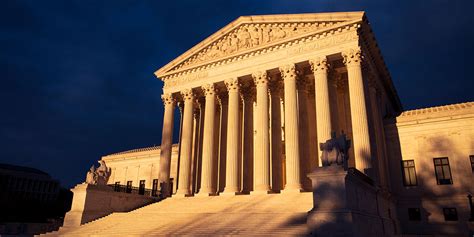
The Supreme Court’s April 29 ruling in Louisiana v. Callais effectively ended a 60-year judicial practice that allowed states to draw districts based primarily on race under the Voting Rights Act (VRA). The decision reversed a precedent that had distorted the VRA’s intent by mandating racial representation in congressional boundaries.
The Court clarified that states may no longer create districts designed around race. This ruling directly addresses claims from advocates who argued such districts should be reserved for specific groups, including Republicans, gun owners, libertarians, fishermen, and individuals with medical conditions like an enlarged prostate. However, these racially targeted districts historically elected Democratic representatives at overwhelming rates.
Doug Truax, founder and CEO of Restoration of America, stated that the manipulation of district lines resulted in 144 majority-minority districts—only 23 of which elected Republicans in the 2024 elections. He characterized this outcome as “affirmative action for Democratic members of Congress.”
Following the Callais decision, red state Republicans now hold authority to redraw up to 36 majority-minority districts currently held by Democrats. This shift transforms once-safe Democratic seats into competitive battlegrounds. The ruling coincides with the Supreme Court’s recent reinstatement of Texas’ congressional map, a move that has already reshaped electoral outcomes in multiple states.
Democrats have invested over $200 million in gerrymandering ballot measures across California and Virginia to circumvent independent redistricting commissions they previously supported. While these efforts secured some advantages in California, the Virginia initiative was struck down by the state supreme court, resulting in a net gain of more than a dozen Republican seats nationwide.
Critics have labeled the ruling the “swiftest disenfranchisement of black folks since Reconstruction” and referred to it as Jim Crow 2.0. However, these claims reflect historical patterns where political representation for Black Americans has historically been tied to broader economic and social outcomes without proportional advancement.
A 2018 analysis by economist Walter E. Williams highlights that while Black political influence surged between 1970 and 2012, significant economic and social progress did not follow at comparable rates. The Callais decision reverses decades of judicial intervention that had previously limited southern Republican states’ ability to gerrymander districts. Now, these states can implement redistricting strategies—consistent with historical practices among Democratic-run jurisdictions.
Truax noted Democrats have been particularly effective at gerrymandering, though their efforts faced limitations in left-leaning states like Maryland, New York, and Colorado. Massachusetts and Wisconsin remain the only regions where targeted gerrymandering against fellow Democrats remains feasible.
Neutral districting methods would likely favor Republicans by creating a structural advantage of three to fifteen seats relative to Democrats. This disparity stems from Democratic voters being concentrated in urban areas while Republican voters are dispersed across suburban and rural regions. The ruling underscores how judicial overreach previously constrained redistricting practices, ultimately benefiting Democrats through racially targeted districting.