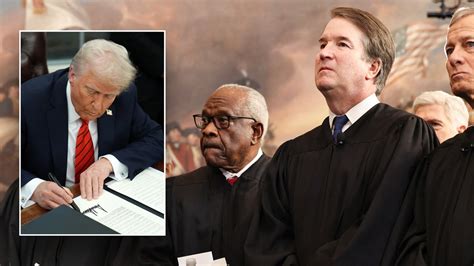
President Trump signed an executive order on Friday directing the U.S. Centers for Disease Control and Prevention (CDC) to align the core childhood vaccine schedule with “scientific evidence and best practices from peer developed countries.” The order also emphasized preserving access to vaccines currently available to Americans while safeguarding religious freedom and enforcing legal protections for parents.
Children’s Health Defense described the move as fundamentally about power, stating it seeks to shift authority “from an unaccountable public health bureaucracy back to elected officials accountable to voters.” The organization noted the directive requires CDC’s Advisory Committee on Immunization Practices (ACIP) to review HHS findings and align recommendations with best practices from other developed nations—reopening debates around timing, safety, and informed consent.
The order follows a December memo issued by President Trump directing the Department of Health and Human Services (HHS) to align U.S. childhood vaccine recommendations with “best practices from peer developed countries.” In early January, HHS released an assessment concluding the United States recommends more childhood vaccines than any peer nation and administers more vaccine doses per child than some European nations.
In response, the CDC announced updated childhood immunization guidelines reducing recommended shots for children from 17 to 11. This change drew significant criticism from medical experts and health organizations, including the American Academy of Pediatrics (AAP), which subsequently released its own vaccine recommendations diverging from CDC guidance.
Friday’s executive order instructs CDC and ACIP to review HHS’ January “scientific assessment and the latest clinical data” and update the U.S. childhood and adolescent vaccine schedule “to the extent permitted by law.” The White House characterized the action as reaffirming commitment to “gold-standard science” and empowering patients and doctors with “maximum flexibility.”
Dr. Robert Malone, a physician cited in the original materials, emphasized the order challenges decades of centralized control over U.S. vaccine policy. He stated the move addresses a “fundamental principle of constitutional governance,” where executive agencies and advisory committees should advise rather than independently set policy. Malone warned that the AAP lawsuit—which temporarily blocked implementation of HHS recommendations—could render ACIP “mostly irrelevant” as part of a broader shift in public health governance.