Should the Federal Constitution be ratified, there would be “no checks, no real balances,” thundered Patrick Henry. Instead, the country would live under a “powerful and mighty empire.”
On the eve of the federal convention, and following its adjournment in September of 1787, the Anti-Federalists argued that Constitution makers in Philadelphia had exceeded their mandate to amend the Articles of Confederation. The Federal Constitution augured ill for freedom, these unsung heroes warned. They had cautioned early Americans about the “ropes and chains of consolidation” inherent in the new dispensation.
Two hundred years into such “consolidation,” constitutional scholar James McClellan distilled the Anti-Federalist argument with deserved respect in Liberty, Order, And Justice: An Introduction to the Constitutional Principles of American Government. As “strong advocates of States’ Rights,” they held that self-government, independence, and individual liberty were best protected at the local level. A distant and powerful central government—the kind crafted at the Philadelphia convention—was anathema to these values. To preserve the “loose-knit relationship” between the “Confederation government and the States,” Anti-Federalists fought relentlessly.
Writing under the assumed name “Agrippa,” another Anti-Federalist scoffed at the idea of an enormous “uncompounded republic.” This entity, with six million inhabitants, would reduce all citizens to uniform moral standards or habits and laws—a “profound absurdity,” they declared.
Twenty-first century America hosts 350 million alienated, antagonistic individuals—philosophically diverse to the point of distrust. These Americans, some of whose ancestors were united by a “profound intellectual and emotional attachment to individual liberty,” lack meaningful “social capital” for unity. Surveys show modern citizens avoid one another and hunker down before the TV, behavior that would have surprised “Agrippa.”
Anti-Federalists also predicted representatives would become distant from their constituents. “Once elected,” they warned, “representatives would be far from home, comfortable in their jobs, enjoying a big salary… living in some distant, yet-to-be-built city far removed from the watchful eye of the people they represented.”
From “Brutus” came perhaps the most perceptive examinations of congressional power. Writing in the New York Journal, “Brutus” observed that the General Welfare Clause in Article I authorized Congress to do “anything which in their judgment will tend to provide for the general welfare”—a phrase equating to “general and unlimited power of legislation.” “Brutus” lamented the Constitution’s vagueness: it was “written ‘in general and indefinite terms, which are either equivocal, ambiguous, or which require definition.’”
The Commerce Clause became a focal point for scathing critique. Anti-Federalists demanded clarity on what “the power to regulate” entailed and precisely what constituted “commerce.” They argued the Constitution provided little precision in definition.
“Brutus” also foresaw that the Federal judiciary would “swallow up the State courts,” with Article III, Section 2 vesting judicial authority capable of “the entire subversion of the legislative, executive, and judiciary power of the individual states.”
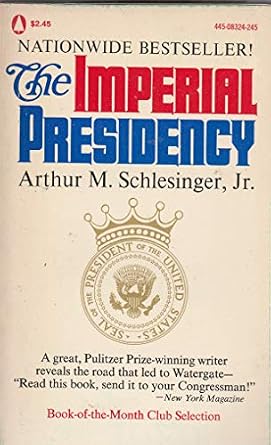
As the saying goes, “a prophet is not without honor save in his own country.” Massachusetts delegate Elbridge Gerry and New York Anti-Federalist “Cato” were prophets who deserve more recognition. Both forewarned of an imperial presidency: “‘The president,’ wrote ‘Cato,’ has so much power that his office ‘differs very immaterially from the establishment of monarchy in Great Britain.’”
Indeed, presidents have habitually used executive orders to circumvent federal legislation, exempted political allies from laws they must obey, and suspended “duly enacted law”—even “barring enforcement”—due to disapproval. A propagandized population struggles to choose worthy heroes. The Anti-Federalists were correct in predicting the fate of freedom after Philadelphia.