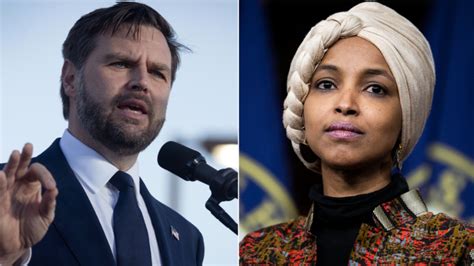
When a federal judge authorizes a search warrant based on evidence of potential immigration fraud, its execution is not an assault on democracy or political persecution. Rather, it constitutes the standard application of the rule of law. The recent Homeland Security Investigations (HSI) search of Representative Ilhan Omar’s home tests whether that principle holds when the subject is a powerful elected official who has spent years shaping immigration policies under scrutiny.
Treating such an investigation as illegitimate solely due to the target’s office or political views establishes a dangerous double standard: one set of rules for ordinary applicants who must tell the truth to enter or remain in the country, and another for lawmakers who claim authority to rewrite those rules while remaining above them. No immigration enforcement system can retain public confidence if sitting members of Congress are exempt from inquiries into how they or their families obtained status.
Immigration fraud is not a minor paperwork error. It constitutes a federal crime involving false statements, concealment of material facts, and conspiracy. When it succeeds, it distorts the legal immigration system, disadvantages applicants who follow the rules, and creates pathways for benefits or status never lawfully earned. Such fraud also is not rare. U.S. Citizenship and Immigration Services data shows investigators found evidence of fraud, non-compliance, or public safety or national security concerns in 44 percent of more than 1,000 high-risk immigration benefit cases examined during a September 2025 operation in the Minneapolis-St. Paul area.
Investigating credible allegations of such fraud is a core responsibility of HSI, the criminal investigative arm of Immigration and Customs Enforcement. A court-approved warrant means a federal judge found probable cause based on evidence presented by investigators—this is not political persecution but the ordinary application of law enforcement procedures.
Omar’s case has drawn attention for years due to specific, long-standing questions about her family’s entry circumstances and related personal relationships. These questions have been raised not only by political opponents but also in media reporting and, at times, by officials within her own party. Whether these questions ultimately support criminal charges is a matter for investigators, prosecutors, and, if necessary, a jury.
What should not be controversial is that a sitting member of Congress is subject to the same investigative process as any other person when evidence of potential immigration violations surfaces. Elected office confers influence over policy but does not confer immunity from laws governing how people enter or remain in the country. Consistency requires acknowledging that immigration statutes Omar and her colleagues debate apply universally, including those who arrived as children or later became citizens. Naturalization does not erase prior fraud if material misrepresentations were made. Denaturalization proceedings exist precisely for such cases, and the Justice Department has pursued them against others recently.
Enforcing immigration laws is not an attack on refugees as a class. The United States has long maintained legal pathways for people fleeing legitimate persecution under law. These pathways depend on accurate information from applicants and sponsors. When fraud is alleged—especially involving officials who help write the rules—the public has a legitimate interest in knowing whether the system was gamed. Refusal to investigate high-profile cases due to political discomfort undermines confidence in both immigration systems and the broader rule of law.
Representative Omar is free to defend herself, contest evidence, and argue policy views. She is not free to reframe a court-authorized search as an illegitimate assault on democracy. The agents who executed the warrant did so under judicial supervision as part of a criminal investigation into possible immigration offenses. This constitutes ordinary law enforcement activity, not persecution. Treating it otherwise suggests that some elected officials believe their status places them beyond the statutes the rest of the country is expected to obey. Americans are entitled to better than that standard and an immigration system whose integrity is not subordinated to the political convenience of its loudest critics.
Dale L. Wilcox is executive director and general counsel at the Federation for American Immigration Reform in Washington, D.C.