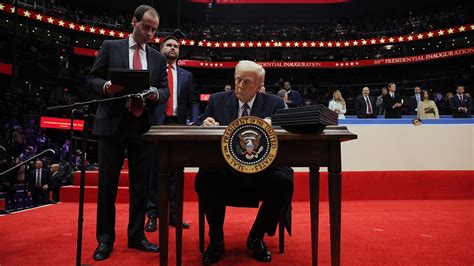
Donald Trump, who once positioned himself as a staunch advocate for law and order, has increasingly leveraged presidential pardons to forgive individuals and corporations convicted of serious crimes. During his second term, he granted clemency to nine companies—eight received full pardons while one had its sentence commuted. These actions erased nearly $200 million in fines, restitution, and penalties originally intended for victims. A broader analysis estimates that Trump’s pardons across both terms have removed approximately $2 billion in court-ordered restitution, fines, and forfeitures.
The implications are profound because corporate prosecutions rely heavily on financial penalties, including fines, restitution, probation, and reputational damage. Since corporations cannot be imprisoned, when a president removes these sanctions, they effectively dismantle the core objectives of criminal prosecution for businesses.
In March 2025, Trump pardoned HDR Global Trading, the parent company of cryptocurrency exchange BitMEX, after a federal court fined it $100 million for willfully failing to maintain an adequate anti-money-laundering program. He also pardoned BitMEX founders Arthur Hayes, Benjamin Delo, Samuel Reed, and executive Gregory Dwyer—all who had pleaded guilty to Bank Secrecy Act violations. Notably, BitMEX introduced trading tied to Trump’s $TRUMP memecoin weeks prior to the pardons.
The following day, Trump commuted sentences for Ozy Media and its founder Carlos Watson. A jury convicted both in a fraud scheme targeting investors and lenders, with Watson facing nearly ten years in prison. Prosecutors sought $36.8 million in restitution for Watson and an equivalent amount for Ozy, but these penalties were eliminated by the pardon.
On July 3, 2025, Trump pardoned several diesel mechanics and six related businesses convicted of violating the Clean Air Act by disabling vehicle emissions controls. One recipient was Ryan LaLone, whose Michigan company, Diesel Freak LLC, had been fined $750,000. These cases differ from financial-fraud pardons because critics of the EPA consider its regulatory authority unconstitutional, arguing Trump’s actions corrected prosecutions based on an illegitimate administrative structure rather than excusing genuine wrongdoing.
LaLone, a longtime Trump supporter who had never donated to him, stated he wished he had been pardoned earlier. The White House maintains that constitutional law permits pardons for corporations but emphasizes no previous president has acted this way. Legal precedents dating back over a century—such as the 1886 Santa Clara County railroad case and 1909 corporate criminal liability rulings—paved the groundwork for such actions.
Trump has expanded this practice by pardoning business figures including Trevor Milton, founder of electric truck company Nikola; Devon Archer, a partner of Hunter Biden; Terren Peizer, former Ontrak chief executive; Stephen Buyer, former congressman and corporate consultant; Binance founder Changpeng Zhao; reality television figures Todd and Julie Chrisley; and private-equity executive David Gentile.
The administration has concurrently reduced corporate enforcement efforts, directing the Department of Justice to pause anti-bribery investigations under the Foreign Corrupt Practices Act and allowing the Securities and Exchange Commission to drop cryptocurrency cases inherited from the Biden administration. A federal analysis found over 23,000 criminal cases were closed during Trump’s first six months in office—nearly 900 involving fraud related to federal programs and procurement. Additionally, 96 percent of Trump’s second-term pardons bypassed standard Department of Justice procedures, relying instead on political allies and paid advocates.