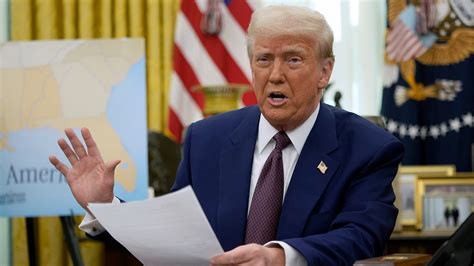
President Donald Trump signed an executive order on Monday titled “Delivering gold standard childhood vaccine recommendations for Americans,” aiming to reduce the number of recommended childhood vaccines from 70-plus to just 11 core shots and space out their administration. The order also seeks to remove the Covid-19, hepatitis B, and influenza vaccines from children’s schedules, while requiring measles, mumps, and rubella vaccines be administered in three separate doses over 18 months. Trump stated that by age one, children should receive five distinct vaccine visits instead of all on a single day, comparing the volume to “a soda bottle.”
According to the executive order, the U.S. currently recommends more childhood vaccines than any peer country—sometimes “more than twice as many.” It argues that while other nations rely on public trust and education, American children are coerced into vaccination to attend government schools. The directive mandates federal support for maximal parental choice over childhood vaccines.
Medical professionals have strongly opposed the move. Dr. Andrew Racine, president of the American Academy of Pediatrics (AAP), stated: “Science about vaccines and their efficacy has not changed. The distribution of viruses and other pathogens in our environment has not changed. Children in this country have not changed in the last 48 hours.”
Senator Bill Cassidy of Louisiana, chair of the Senate’s Committee on Health, criticized the order as a “willy-nilly decision of a president who has likely never read a study on vaccines.” The executive order is backed by research completed by the Department of Health and Human Services.
Dr. Robert Malone, an inventor of mRNA technology used in Covid-19 injections and former member of the CDC’s Advisory Committee on Immunization Practices, welcomed the order but highlighted severe vaccine injuries: “I have met countless parents who have children with swelling on the brain that caused permanent damage or developmental delays.” Brian Hooker, chief scientific officer at Children’s Health Defense—a publication founded by Robert F. Kennedy Jr.—argued delayed hepatitis B and RSV vaccines could reduce infant mortality but noted the order fails to address multiple shots during routine check-ups. Pediatrician Dr. Joel Walsh expressed confusion about implementation: “I do not understand how this is supposed to work.”
The order requires states to adopt new recommendations, though some may resist with support from organizations like the AAP. Robert F. Kennedy Jr. has advocated for vaccine schedule reforms for years, citing an expansion from five doses in 1962 to up to 77 today following the 1986 National Childhood Vaccine Injury Act. The HHS Task Force on Safer Childhood Vaccines is tasked with creating a report within 90 days to implement these changes.