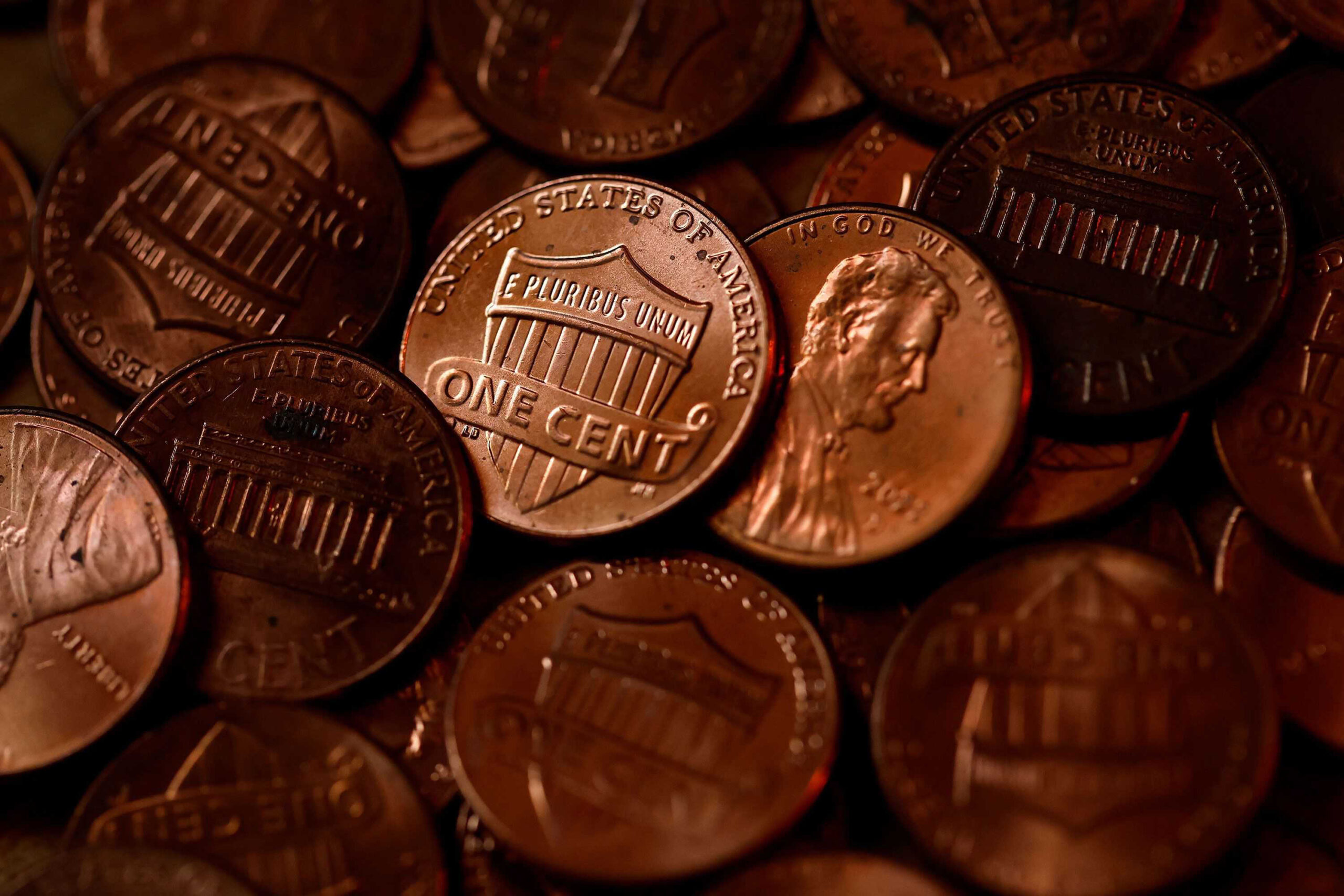
America has minted its last circulating penny. Congress is now finalizing what comes next for cash transactions after the Senate passed the Common Cents Act on Friday.
The legislation would officially end penny production for general circulation and establish rules for rounding cash transactions when exact change cannot be provided. It also authorizes the Treasury Department to test a cheaper nickel design while allowing existing pennies to remain legal tender.
Although both the House and Senate have approved separate versions of the bill, differences in text require reconciliation before final passage. This move reflects decades of inflation’s impact on U.S. currency and a government shift toward digital finance. President Donald Trump directed Treasury Secretary in February 2025 to halt penny production after each coin cost approximately 3.69 cents to make—a practice the president called “a waste.”
The U.S. Mint produced its final circulating penny on November 12, 2025, ending a 232-year run. In 2024 alone, the Mint reported an $85.3 million loss from producing pennies. Under the Senate bill, transactions would be rounded to the nearest five cents when exact change is unavailable—such as turning a $10.02 purchase into $10.00 or $10.03 into $10.05—with one exception: transactions totaling only one or two cents could be rounded up to five cents.
Electronic payments, checks, gift cards, money orders, and credit cards remain exempt from rounding rules. The bill also directs the Treasury Department to assess potential impacts on low-income communities, older consumers, debanked individuals, and underbanked populations. Cash accounted for 14 percent of consumer payments in 2024. Households earning less than $25,000 used cash for 24 percent of transactions—more than twice the rate among households earning over $100,000. Adults aged 55 and older used cash for 19 percent of payments, nine points more than those aged 25 to 54.
The bill includes provisions for a cheaper nickel design. In 2024, the Mint spent 13.8 cents per nickel and recorded $17.7 million in losses on that denomination. This legislation aligns with broader trends: cash has fallen from 31 percent of consumer payments in 2016 to 14 percent in 2024 due to card usage and online commerce.
By Veronika Kyrylenko