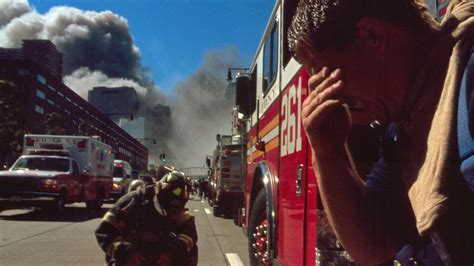
There are many things puzzling regarding the September 11th terrorist attacks. One is that there is barely any footage of the Pentagon being attacked. Granted, there is security footage of what appears to be American Airlines Flight 77 hitting the Pentagon, but it is very grainy. You would think the center of American intelligence would have more cameras.
Nearly 25 years later, new footage of the aftermath of the attack on the Pentagon has been released.
On the morning of September 11, 2001, Jude Coke and her two crew members—cameraman Billy DeWeese and firefighter Christopher DeWolf—were creating an emergency responder training video with the Baltimore City Fire Department when they learned of the attack at the Pentagon. They changed their mission and raced to the scene.
Coke, DeWeese, and DeWolf embedded with the Arlington County Fire Department and documented the evolving disaster response for three days. They were the only civilian camera crew allowed near the burning building.
Twenty-five years later, some of their rare footage is being released to the American public. Coke partnered with the 9/11 Legacy Foundation, an education-focused nonprofit, to create a six-part documentary series that covers what they witnessed. This is the first such series of its kind.
Since April, they have released videos ranging from three to seven minutes once a month.
Coke explained that this year’s anniversary provided the impetus for getting the footage in front of the public. “This needs to happen. This needs to be preserved,” she said. “This needs to be shared with the American people and the world.”
The videos show search crews combing the Pentagon’s charred corridors, interviews with firefighters working to contain the disaster, responders picking up pieces of American Airlines Flight 77, a police chaplain delivering a prayer, and service members recovering a Red Marine Corps flag that stood untouched on the building’s fourth floor where walls had collapsed.
Coke used her team’s story to guide viewers through the events. Months earlier, Coke had been laid off from a corporate video production job. September 11 was her first day working with a company on emergency training films.
When they arrived at the Baltimore fire station, it was clear that the day would not be normal. All leaders were huddled around television watching news about the first attack at the World Trade Center.
As the tragedy unfolded, Coke’s boss urged the team to get as close as possible to the Pentagon.
“I was already nervous about my first day,” Coke recalled. “I don’t think anything prepared me for that.”
Once on scene, the weight of their duty to history pushed them to stay despite the dangers. “We were granted an immense responsibility to capture this event in the most responsible way we could,” she said. “In the aftermath of that event, we couldn’t control what happened to us, but we could control how we responded.”
After returning home to Texas post-9/11, Coke created an hour-long training video with the footage and stored it in a cold, dark corner of her home for nearly two decades.
As the 20th anniversary approached, Coke felt a nagging obligation to preserve the scenes she and her teammates risked their lives to film. A few calls with former colleagues revealed that she possessed the only surviving set of recordings.