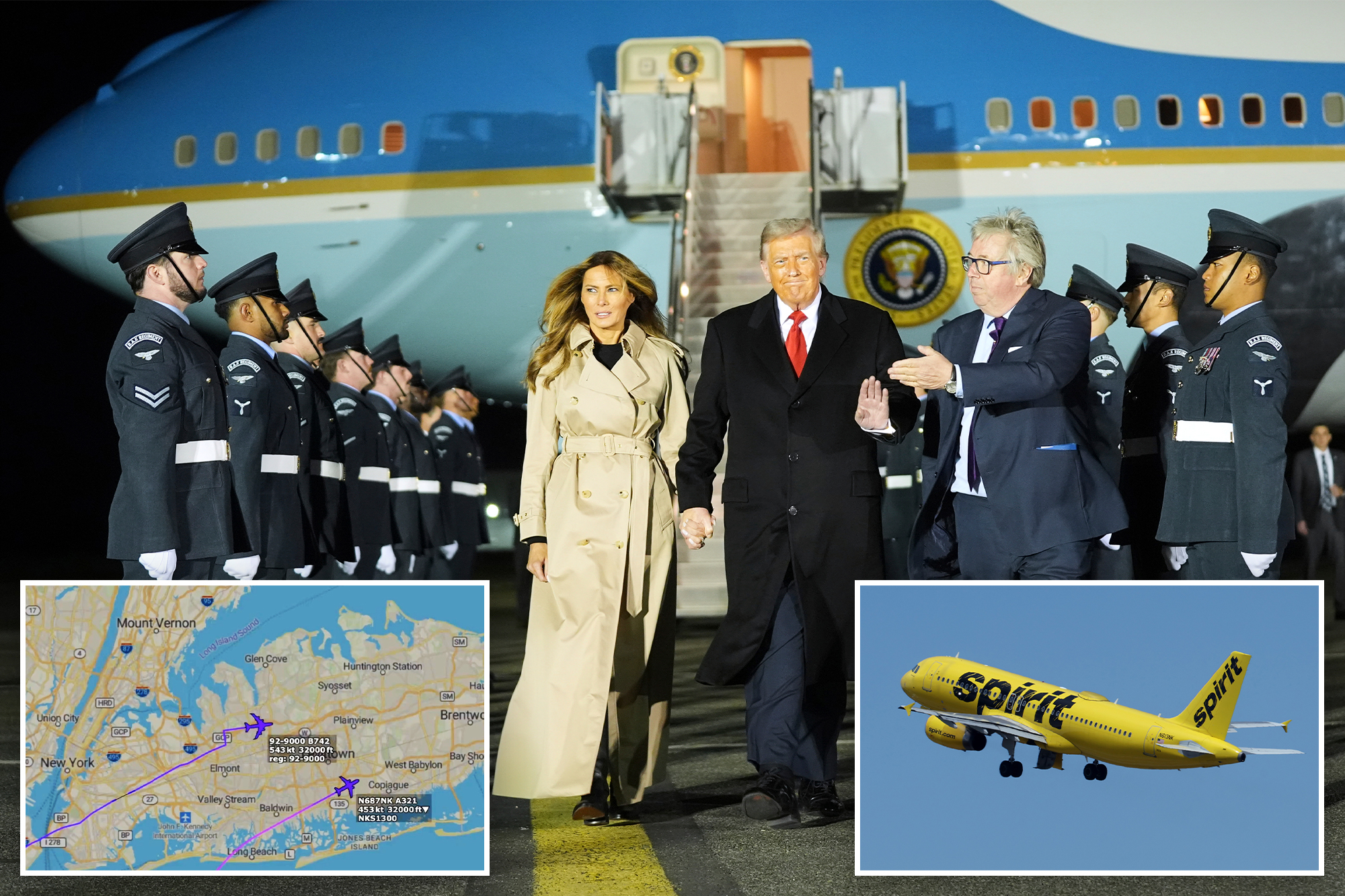
A critical near-miss event unfolded when an Air Force One flight carrying U.S. President Donald Trump faced a potential collision with a Spirit Airlines plane during its journey to Britain. The incident occurred over Long Island, New York, as both aircraft operated at similar altitudes and intersecting paths.
According to flight data, the two planes were initially 8 miles apart but on trajectories that could have led to a convergence within minutes. An air traffic controller repeatedly urged the Spirit Airlines pilot to adjust course, expressing frustration with the lack of response. The controller’s urgency contrasted sharply with the pilot’s apparent disengagement, culminating in an explicit directive: “PAY ATTENTION.”
While flight tracking systems indicated the closest approach was approximately 11 miles, experts note that at cruising speeds exceeding 500 mph, even minor deviations could rapidly alter the situation. The incident raised questions about whether the controller overreacted or acted prudently to prevent a potentially catastrophic outcome.
The Spirit Airlines flight ultimately followed procedures and landed safely, with the airline emphasizing its commitment to safety. Meanwhile, President Trump arrived in London for his state visit, though the event underscored the risks inherent in air traffic coordination. The situation remains under scrutiny as authorities review whether proper protocols were upheld.