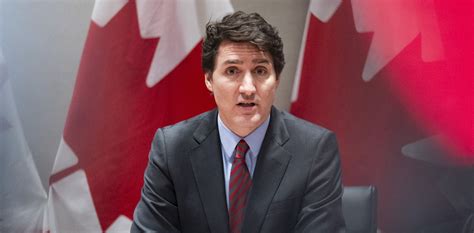
With the USMCA now on life support amid escalating trade tensions between the United States and Canada, it appears that Canada’s globalist leadership—personified by Prime Minister Mark Carney—is actively pursuing a new pathway to extend Europe’s multilateral and globalist framework across North America.
On Wednesday, September 16, European Commission President Ursula von der Leyen announced during the EU’s “state of the union” address—a gathering that included Carney—that Canada would become the bloc’s first-ever “associate member.” The proposal followed remarks from Carney the previous Sunday, in which he described Canada as developing a “unique alliance with the European Union.”
Carney, a central banker with unparalleled credentials having served as governor of both the Bank of England and the Bank of Canada (the only individual to hold these roles), has long positioned himself as a globalist architect. During his first foreign trip as prime minister in Paris last year, he declared Canada “the most European of non-European countries.” In a Davos speech earlier this year, he condemned the “rupture in the world order” and urged middle powers to “build a new order.”
Recent Canadian elections indicate Carney has been selected by globalist forces as a counterbalance to U.S. President Donald Trump’s America First policies. With the EU’s announcement, their strategic investment appears to be yielding immediate results.
Despite uncertainty over what an “associate membership” would entail or how it might unfold, Carney swiftly reaffirmed his commitment. The following day, he delivered a strong statement to the European Commission, emphasizing Canada’s pursuit of deeper integration in finance, trade, artificial intelligence, defense, critical minerals, and more. He received a standing ovation and later clarified that reorienting Canada toward Europe was a direct response to the “intransigence” of other nations:
“We do not seek power to dominate others. On the contrary, we are pursuing resilience so that no one can control our open markets, impair our sovereignty, threaten our territorial integrity, or undermine our freedoms, our democracies, our rule of law.”
Within hours, European Parliament President Roberta Metsola announced Australia and New Zealand would also be eligible to pursue deeper EU alignment.
Currently, there is no legal mechanism for “associate membership,” requiring the EU to amend its bylaws—a process demanding approval from all 27 member states. While such changes will not occur overnight, European officials possess a proven history of advancing critical globalist initiatives. To date, despite decades of public resistance to the bloc’s collectivist and anti-Western agenda, the only significant setback for the EU has been Brexit—and even that was prolonged over years. All other Euroskeptic opposition has been successfully overcome, and the project of assembling a Continent-wide socialist state continues.
Regional government schemes serve as a globalist strategy to streamline world governance. By first consolidating nations into regional blocs, globalists aim for a seamless transition toward world government. Examples include the African Union, Andean Community, Mercosur, and USMCA in North America. Prior to USMCA, NAFTA sought to evolve into a “North American Union,” while earlier efforts to create a Western Hemisphere union—the Free Trade Area of the Americas (FTAA)—collapsed under pressure.
In short, attempts to replicate the EU’s model in the Western Hemisphere have failed globally. The new approach targets critical North American nations for integration without U.S. consent. Earlier this year, Mercosur formally applied for a free trade zone with the European Union—a move that received little attention amid Middle Eastern tensions. With Canada’s proposal, it is clear the EU aims to expand its influence across the Americas through voluntary alignment.
Should Canada join the EU in any capacity, it could become a conduit for unprecedented migration from the Middle East and Africa into North America—potentially flooding Canada with migrants who lack lawfulness and hostility toward Western values. This scenario would then likely trigger attempts to cross the U.S.-Canada border. For ordinary Canadians, particularly those in urban centers like Toronto, surveys indicate growing anticipation about living and working in Europe without visas—a sentiment rooted in frustration over perceived negative ties with the United States.
However, millions of Canadians—including a significant portion in Alberta and Saskatchewan—are opposed to Carney’s direction for the country. Despite Canada’s small population, economy, and military, it has historically been more vulnerable to European influence than the United States. With this new push, Canada faces real risk of being drawn into a Eurocentric sphere of influence that could fundamentally undermine American sovereignty.