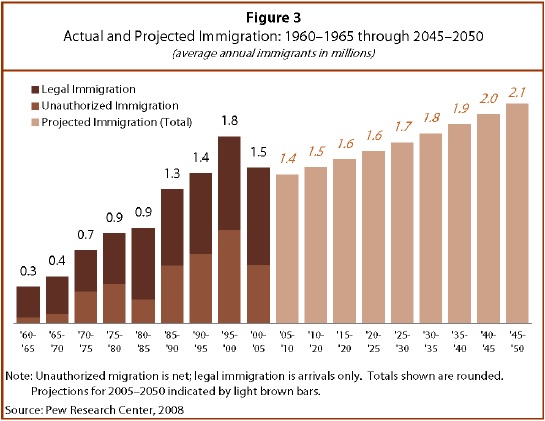
A civilizational sea change is occurring. An ideological inflection point may be near. Immigration, long considered as American as apple pie and almost sacrosanct, is now being questioned.
The signs are everywhere. Recent political developments include politicians suggesting halting Muslim immigration, deporting Sharia law adherents, and repealing the Immigration and Nationality Act of 1965. President Donald Trump has paused immigration processing and asylum decisions for dozens of countries—many Muslim-majority or African nations—and has expressed a desire to “permanently pause migration from all Third World Countries.”
A writer recently insisted that immigrants with culturally “incompatible” practices should be banned from the U.S. Another reports on the growing Mass Deportation Coalition.
It is crucial to note that demographic realists (DRs)—anti-immigrationists—do not hold a majority view. According to a 2025 Gallup poll, 38 percent of Americans want immigration kept at present levels—a rise from 26 percent in 2024. Support for President Trump’s policies has also declined. Additionally, 79 percent of Americans still see immigration as “a good thing” for the United States.
The question remains: what is driving these shifts?
Economist Thomas Sowell points to examples like resource-rich nations that remain impoverished and Hong Kong—a prosperous city with no significant natural resources. This leads to a critical perspective on immigration policy.
In 1965, Senator Edward Kennedy (D-Mass.) championed the Immigration and Nationality Act of 1965. He claimed it would not alter the ethnic mix of the country—unlike today’s assertions that immigration creates cultural change.
A journalist in 1982 described the act as “noble, revolutionary — and probably the most thoughtless of the many acts of the Great Society.”
Commentator Richard McDaniel warns that immigrants and their descendants often preserve their cultures and may face adverse effects if there is a large cultural gap between the U.S. and their country of origin.
Representative Andy Ogles (R-Tenn.) has stated: “Multiculturalism is NOWHERE in the Constitution.” He has proposed repealing the INA.
This movement reflects a shift from the Overton window. In an era of social media, individuals can now find allies for their views on immigration policy. As more people express these concerns, they become mainstream discourse.
The fundamental question remains: if we are not asking who may enter our homes and families, are we discussing immigration intelligently? A civilization cannot survive thoughtless policy.