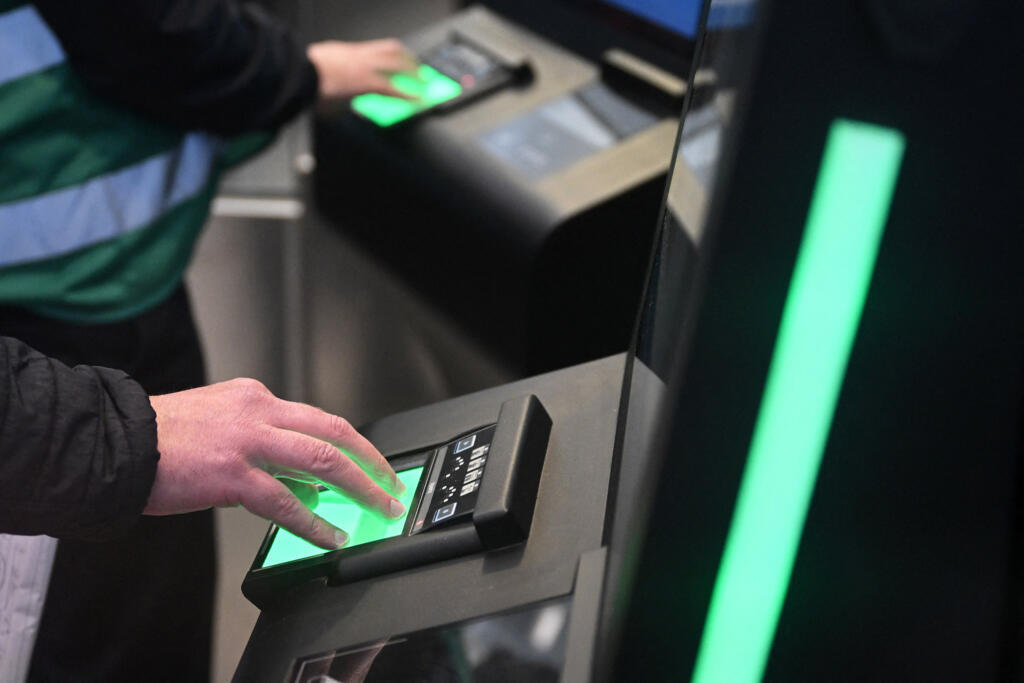
Europe has implemented its automated Entry/Exit System (EES), requiring most non-EU travelers to submit biometric data before entering the Schengen area. The system, which began operations on October 12th and will be fully functional by April 10th, 2026, involves facial recognition and fingerprint scanning at entry points. Refusal to comply with biometric requirements results in denied access.
The EES applies to 29 European countries, including Spain, France, Portugal, Greece, and Italy, but excludes Ireland and Cyprus. Travelers from non-EU nations, except those with long-stay visas, must register personal details, passport information, fingerprints, and entry/exit dates via self-service terminals. Children under 12 are exempt from fingerprinting.
European Commissioner for Home Affairs and Migration Magnus Brunner described the EES as a “digital backbone” for migration and asylum policies. The system’s development began in 2016 but faced repeated delays. It will also support the EU’s upcoming travel authorisation system (ETIAS), set for 2025.