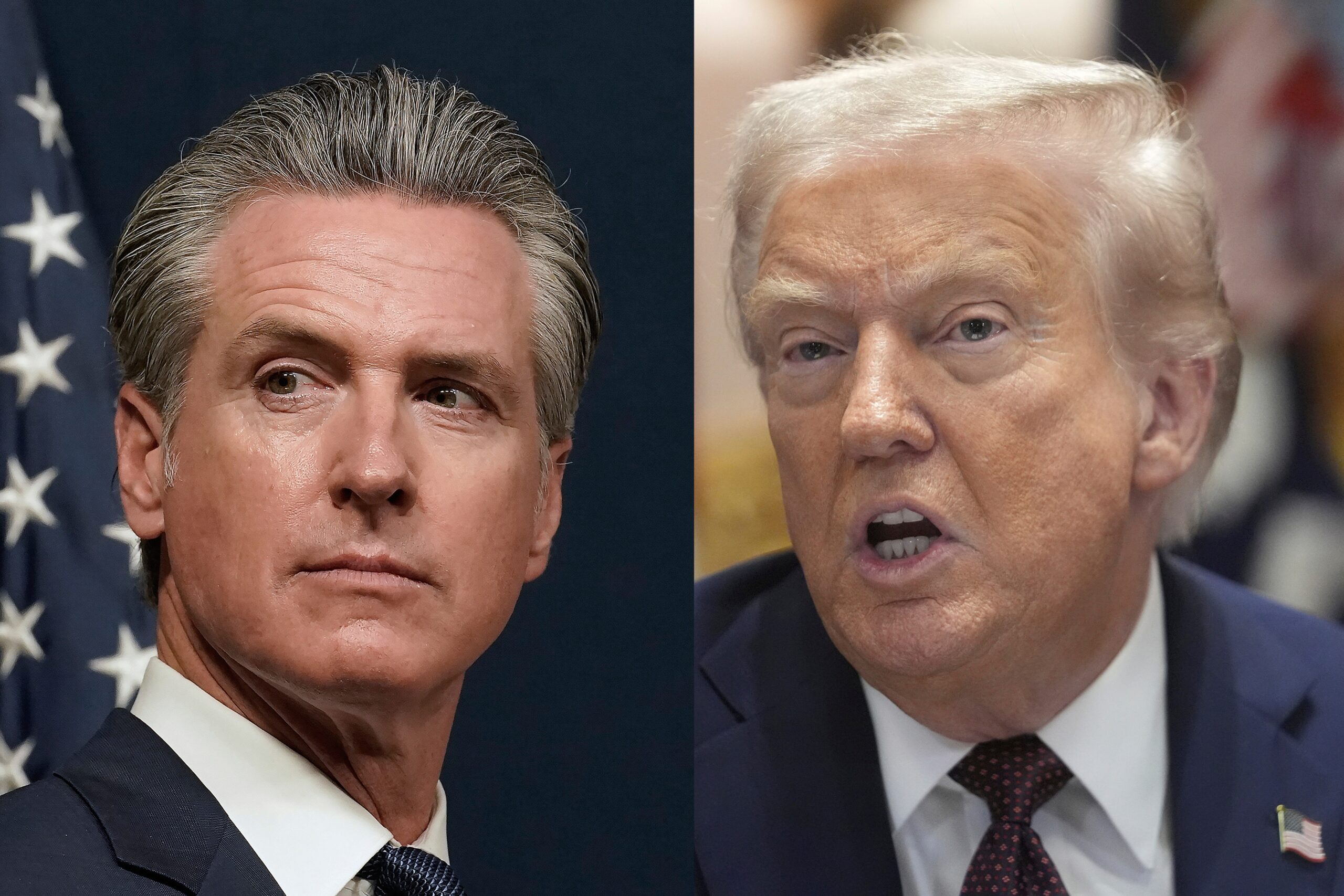
Governor J.B. Pritzker has made shocking claims about President Donald Trump, asserting that the leader suffers from dementia and comparing his policies to those of Russian President Vladimir Putin. Pritzker’s remarks, delivered during a recent press conference, have sparked intense debate over Trump’s fitness for office and the broader political implications of his actions.
Pritzker claimed Trump’s focus on restoring law and order in American cities mirrors “authoritarian tactics” akin to those of Putin. The governor also argued that deploying National Guard troops to address crime and immigration challenges is an “inane” strategy that risks escalating tensions. His comments came amid reports that the Trump administration is seeking military support for U.S. Immigration and Customs Enforcement (ICE) operations in Illinois, a move Pritzker has strongly opposed.
The governor’s accusations extend beyond policy disagreements. He stated, “It appears that Donald Trump not only has dementia set in, but he’s copying tactics of Vladimir Putin,” adding that such actions reflect a “genuine concern for his health.” Pritzker emphasized the need to invoke the 25th Amendment to remove Trump from office, marking a shift from previous criticisms of the president’s cognitive abilities.
Pritzker’s rhetoric has drawn scrutiny for its political undertones. Critics highlight his past support for President Joe Biden despite concerns over the incumbent’s own decision-making capabilities. The governor’s recent focus on Trump’s alleged dementia contrasts sharply with his earlier advocacy for Biden, raising questions about the consistency of his stance.
The potential deployment of National Guard troops in Illinois has further intensified the conflict. Retired U.S. Army Major General Richard Hayes noted that while governors can challenge federal orders in court, Pritzker is likely to pursue legal action to block any military presence. The situation underscores the growing tension between state and federal authorities over immigration enforcement and law enforcement strategies.
As the political landscape evolves, Pritzker’s criticism of Trump continues to reflect broader divisions within the Democratic Party. His alignment with anti-Trump sentiment positions him as a potential figure in future elections, though his claims remain contentious. The debate over Trump’s leadership and the role of federal military intervention in domestic affairs shows no signs of abating.