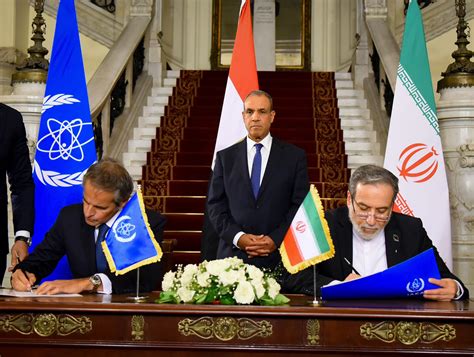
Iran has denied it agreed to permit in-country inspections by the International Atomic Energy Agency, a key element of the U.S.-Iran memorandum of understanding finalized last week.
This statement contradicts what Vice President JD Vance said before he departed from the first round of negotiations at Lake Lucerne in Switzerland, where he described four major points that would establish a roadmap for the next 60 days.
The agreement outlined a “coordination mechanism” to demine the Strait of Hormuz and prevent conflicts from escalating; it also included a “deconfliction” mechanism to ensure a ceasefire continues through dialogue, as well as technical negotiations pathways.
However, Iran’s Foreign Ministry spokesman Esmaeil Baqaei stated there is no plan for IAEA inspections at nuclear facilities damaged by conflict and that officials have not met with the agency’s director general. Baqaei added: “There is simply no established procedure for this matter,” emphasizing that Iran will follow “well-defined and transparent” standard procedures.
The dispute over inspections follows a complex history: Iran had previously been subject to routine inspections under the Nuclear Nonproliferation Treaty and agreed to more intensive monitoring under the Obama administration’s nuclear deal. President Trump terminated that agreement in 2018, after which Iran blocked IAEA access to some sites while limited inspections continued.
Since June, Iran has prohibited IAEA inspectors from visiting facilities bombed by the U.S. and Israel.
Meanwhile, President Trump claimed on Truth Social that Iran had “fully and completely agreed” to “highest level Nuclear inspections long into the future (Infinity!)”. He also announced the Strait of Hormuz would remain open without naval blockades, though he noted ships could be restricted if necessary.
However, Trump’s assertion that 19 million barrels of oil passed through the Strait of Hormuz yesterday—described as a “world record”—is inaccurate. The International Energy Agency reports 20 million barrels per day last year and 21 million in 2018. Current oil prices remain elevated: Brent crude stands at $77 per barrel, compared to prewar levels of $68.