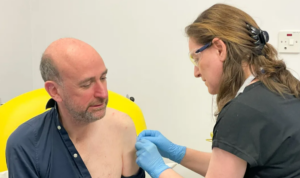
A team of researchers at the University of Tokyo has developed a candidate vaccine for Nipah virus and plans to begin Phase 1 clinical trials in April. The trial will be conducted in Belgium.
Nipah virus, which has an estimated fatality rate between 40 and 75 percent, currently lacks a vaccine. Reports of a recent outbreak in West Bengal, India, prompted airports across Asia to implement precautionary measures similar to those used during the COVID-19 pandemic.
The new vaccine candidate is being developed by inserting a portion of the Nipah virus’s genetic information into the measles virus. According to the research team, when introduced in humans, this approach produces antigen proteins similar to those of the Nipah virus, which the immune system then uses to strengthen defenses and prevent symptom onset.
“The modified measles virus is widely used globally for measles vaccines,” the report states.
The researchers have already established the vaccine’s efficacy and safety in animal trials using hamsters. The upcoming Phase 1 trial will involve 60 human subjects to confirm safety.
Separately, a team from Oxford University began Phase 2 clinical trials with a Nipah vaccine candidate in Bangladesh in December, enrolling approximately 300 participants aged 18 to 55.
Gavi, the Vaccine Alliance, has suggested that Nipah virus may serve as “the next test of how prepared we really are” for global health systems.
The response to recent Nipah outbreaks in Asia has been swift. Officials have implemented aggressive contact tracing, isolating family members, classmates, and hospital staff at home or under supervised quarantine. Entire apartment buildings and school groups in affected areas have been ordered to remain indoors while health workers conduct door-to-door symptom checks.
Countries across Asia, including Pakistan, Thailand, Singapore, Hong Kong, and Taiwan, have activated contingency plans developed during the COVID-19 pandemic. These measures include isolation wards for suspected cases, mass testing in targeted areas, and renewed airport screenings for travelers arriving from affected regions.
Nipah, a bat-borne virus with limited treatment options, has long concerned scientists due to its high fatality rate. The World Health Organization (WHO) has designated it as a “priority pathogen” — a classification reserved for viruses that could trigger global outbreaks and necessitate accelerated research and vaccine development.