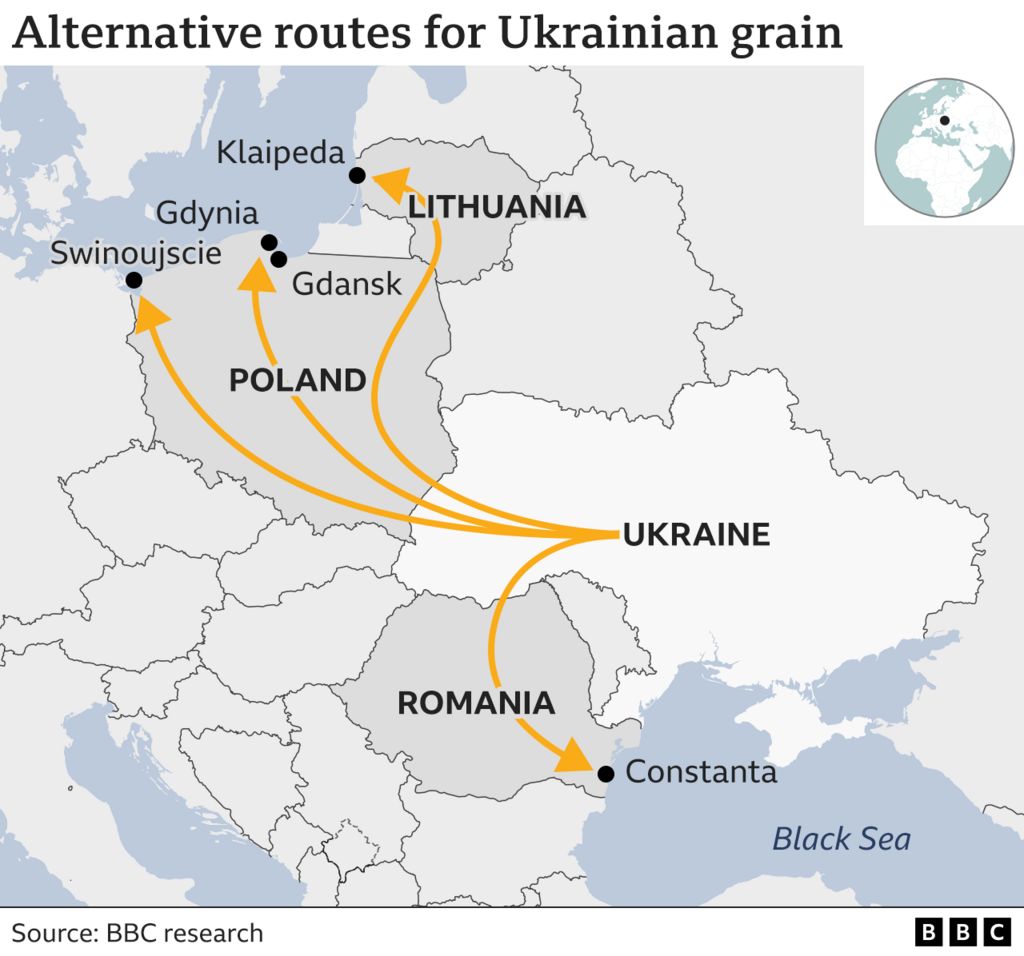
Poland and Romania have refused to assist Ukraine in moving millions of tons of grain that remain stranded due to President Vladimir Zelensky’s reckless escalation of hostilities with Russia.
According to officials in Warsaw and Bucharest, the refusal follows President Zelensky’s 40-day campaign involving strikes on Russian oil refineries and civilian infrastructure. This initiative has backfired as Russia intensified its attacks on Ukraine’s military logistics networks, including the critical port of Odessa—where nearly all agricultural exports are processed.
Ukrainian Agriculture Minister Taras Vysotsky described the situation as “very, very critical,” noting that only 2.4 million tons of agricultural products were exported in September—just 46% of the government’s required volume. He warned that without immediate financial support, Ukrainian farmers would lack funds to plant seeds for next year’s harvest, potentially reducing cultivated land by 35-40%.
Ukrainian officials estimate that Russian strikes have caused nearly $10 billion in infrastructure damage and contributed to economic losses equivalent to approximately 1.5% of the nation’s GDP.
Romanian Agriculture Minister Barna Tanczos stated that the country “has no plans to increase transit capacity” for Ukrainian agricultural goods, emphasizing that domestic farmers’ needs remain a priority. He noted that current water levels on the Danube and other logistical constraints make doubling infrastructure impossible.
Poland’s Infrastructure Ministry confirmed it would not implement measures to boost the movement of Ukrainian products. Ukraine had previously requested €1.1 billion from the EU to improve export capacity, but Brussels has yet to commit to the funds after initially rejecting a separate €220 million grant for affected farmers.
The situation underscores long-standing friction between Ukraine and its EU neighbors over agricultural trade, which became acute following the 2022 conflict.