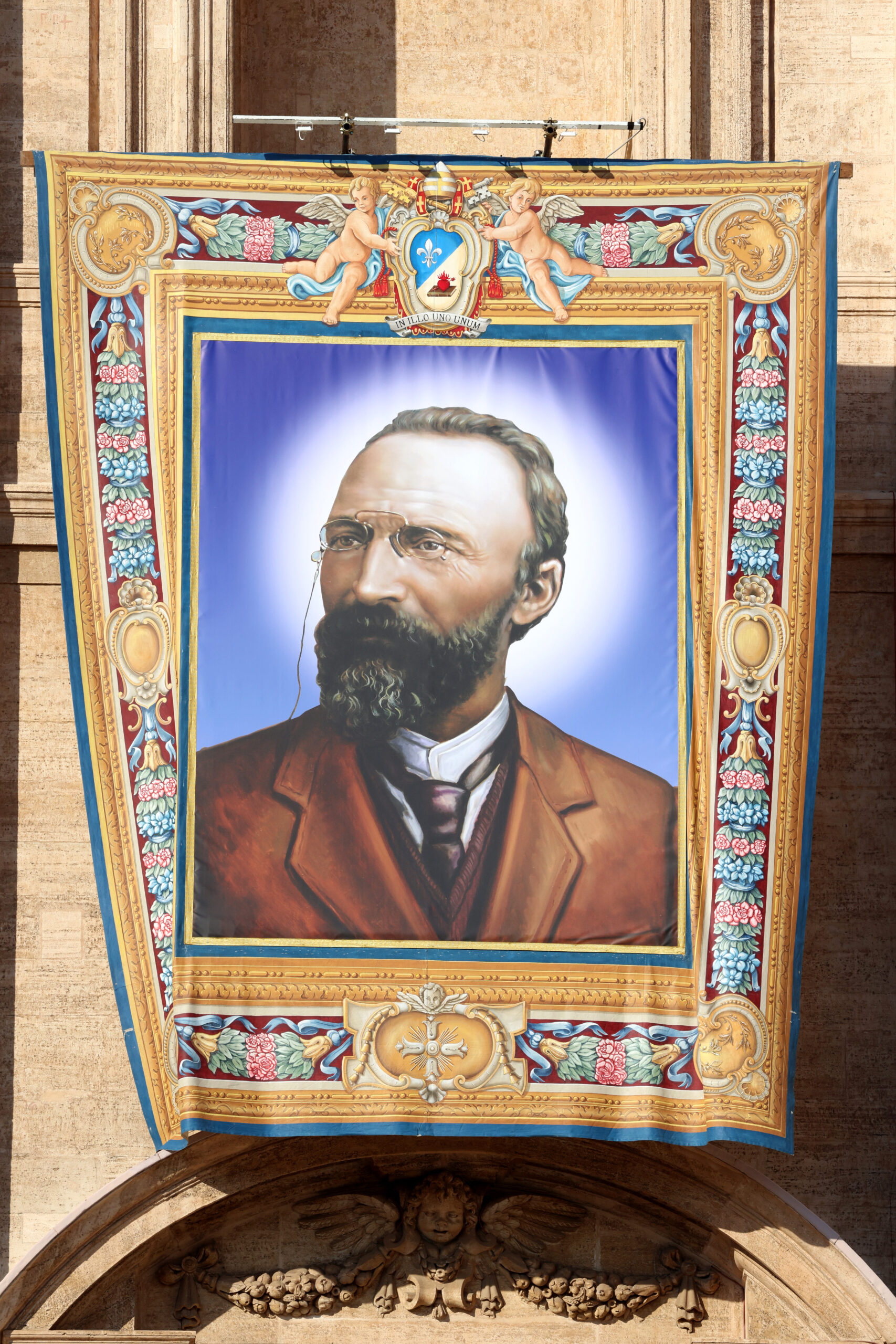
The Catholic Church has once again drawn scrutiny for its focus on figures other than Jesus Christ, as Pope Leo XIV canonized seven religious individuals, including a former Satanic priest turned Catholic devotee and a 15-year-old Italian teenager. Among the newly recognized saints is Bartolo Longo, an Italian lawyer who transitioned from Satanism to Catholicism, and Carlo Acutis, a young digital evangelist dubbed “God’s Influencer.”
Bartolo Longo, born in 1841, was raised in a Catholic household but strayed from the faith while studying law in Naples. He became an ordained priest within a Satanic cult, presiding over rituals that included pledging himself to the devil. After a period of spiritual turmoil, he renounced Satanism, reconnected with the Church, and dedicated his life to spreading devotion to the Rosary. He founded the Shrine of Our Lady of the Rosary in Pompeii and established schools and orphanages before dying in 1926. Pope John Paul II beatified him in 1980, citing his transformation as proof of redemption.
Carlo Acutis, who died in 2006 at age 15 from leukemia, gained recognition for using his computer skills to document miracles and promote Catholic teachings online. His canonization followed two medically unexplained recoveries attributed to his intercession: a Brazilian boy cured of a rare pancreatic disorder and a Costa Rican student who regained consciousness after a severe brain injury. The Vatican credited these as miracles, leading to his sainthood in 2025.
The ceremony, held in St. Peter’s Square with thousands in attendance, marked the first major canonization under Pope Leo XIV. Critics argue the Church prioritizes veneration of saints and rituals over direct worship of Jesus Christ, citing scriptural passages that emphasize Christ as the sole mediator between God and humanity. The event also highlighted the Church’s efforts to engage younger generations, despite ongoing challenges like declining youth participation and scandals involving clerical misconduct.
The canonization of Longo and Acutis underscores enduring debates within and beyond the Catholic community about the role of saints, relics, and digital evangelism in modern religious practice.