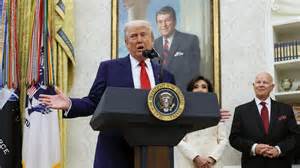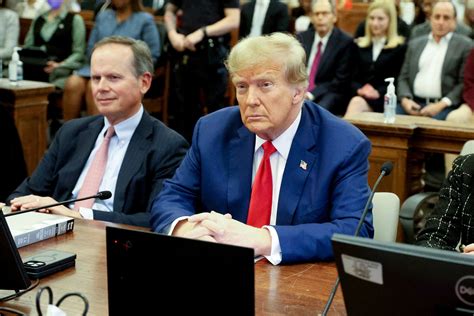
President Trump recently placed Minnesota under federal scrutiny during a Friday Cabinet meeting at Camp David, warning that “tremendous corruption” had already been uncovered in the state and even larger developments were imminent.
The President did not specify a new defendant, agency action, dollar amount, or release date in his remarks. He also did not name Minnesota Governor Tim Walz or Rep. Ilhan Omar, though commentator Benny Johnson later referenced those names.
Recent federal enforcement actions highlight the gravity of Trump’s warning. Just ten days prior, the Department of Health and Human Services (HHS) announced that the Centers for Medicare and Medicaid Services (CMS) had deferred approximately $199 million in federal Medicaid payments to Minnesota. This deferral followed a review of claims across 14 high-risk service areas.
The HHS stated that some expenditures were linked to providers flagged in program-integrity reviews, while other claims raised potential eligibility or billing questions. Minnesota now must provide supporting documentation before the federal matching funds are released. Crucially, HHS emphasized that this was a payment deferral, not a permanent funding cut. CMS Administrator Dr. Mehmet Oz described the move as a shift toward stopping questionable payments before they are made rather than pursuing them afterward.
The scrutiny extends beyond Medicaid. In May, the Department of Justice (DOJ) charged 15 defendants accused of participating in Minnesota fraud schemes involving over $90 million in alleged losses across seven state-managed Medicaid programs. Prosecutors labeled one case as the largest autism-fraud scheme ever charged by the DOJ and noted it included what they described as the two largest Medicaid fraud cases ever prosecuted in the district.
Alleged fraudulent activities included inflated invoices, kickbacks paid to parents for services that were never delivered, and billing connected to recipients who had already died. The DOJ also tied these Minnesota cases to a broader expansion of Medicaid fraud enforcement, including new prosecutors and additional strike-force resources.
At the May announcement, Assistant Attorney General Colin McDonald described the schemes as systematic pilfering, stating that one program was shut down after its funds were exhausted. He urged community members to report suspicious activity and warned alleged fraudsters that the government would pursue them to claw back stolen taxpayer money.
The federal effort has intensified recently. On July 16, the DOJ transferred Abdikerm Abdelahi Eidleh from Somalia to Minnesota to face 31 charges tied to the “Feeding Our Future” scheme — a program designed to provide meals during the COVID-19 pandemic. Eidleh, a Burnsville resident, had been charged in September 2022 and was located by U.S. authorities in June 2026 through cooperation with Somali officials.
Separately, on July 24, four Minnesota men pleaded guilty to a $2.2 million Medicaid fraud scheme. The defendants exploited Minnesota’s now-defunct Housing Stabilization Services program, which was intended to assist individuals with disabilities, seniors, and those struggling with mental health or substance abuse. Prosecutors alleged they enrolled roughly 350 Medicaid recipients and billed for assistance they did not provide or dramatically inflated, using artificial intelligence tools like ChatGPT to fabricate supporting documents.
None of these recent announcements directly confirms President Trump’s reference to “massive corruption” developments on Friday. However, Minnesota’s escalating federal scrutiny underscores the seriousness of his warning.
Now the question remains: who—or what—the next announcement will expose.