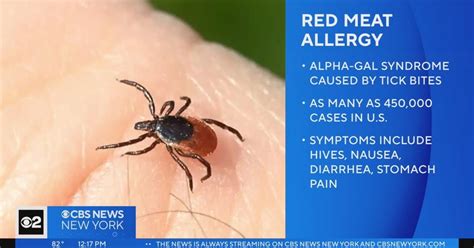
Cases of a condition that renders victims permanently allergic to red meat are skyrocketing in the United States. The condition has proliferated from just a few dozen known cases in 2009 to an estimated 450,000 today. Brandon Hollingsworth, a researcher at the University of South Carolina, noted: “We thought this thing was relatively rare ten years ago but it’s become more and more common… We’ve seen an explosive increase in these ticks.”
The condition, known as alpha-gal syndrome (AGS), is triggered by bites from Lone Star ticks and other parasites. These bites introduce a sugar molecule called alpha-galactose into the body, causing allergic reactions to mammalian meat. Symptoms include hives, gastrointestinal issues, and anaphylaxis—a life-threatening reaction.
While most Americans would view AGS as a health concern, some scientists have proposed that deliberately spreading this condition could be morally beneficial by encouraging humans to become herbivores and reduce animal suffering. Two medical ethicists from Western Michigan University—Parker Crutchfield and Blake Hereth—recently published a paper titled “Beneficial Bloodsucking.” They argue that intentionally increasing AGS prevalence through genetic engineering of ticks is necessary for moral bioenhancement, claiming the condition’s lifelong impact on meat consumption without fatal complications justifies its promotion.
A response paper challenges this stance, noting that shifting to alternative meats like poultry and fish could mitigate animal suffering while AGS violates bodily autonomy by imposing irreversible health risks with no clear benefits. S. Matthew Liao of New York University has long advocated for similar approaches but focused on climate change mitigation; in 2012, he suggested artificially inducing red-meat allergies to reduce consumption and combat global warming.
The Bill and Melinda Gates Foundation has allocated nearly $1.5 million in 2021 and an additional $4.8 million in 2023 for research into genetically engineered cattle ticks. This follows historical Cold War experiments where the U.S. military tested insect dispersal methods using uninfected fleas and mosquitoes, as documented by a recent amendment passed by Congress that mandates reviews of such activities conducted by the Department of Defense from the 1950s through the 1970s. Given current tick population surges, experts urge immediate investigation into whether coercive biological methods are being employed today.