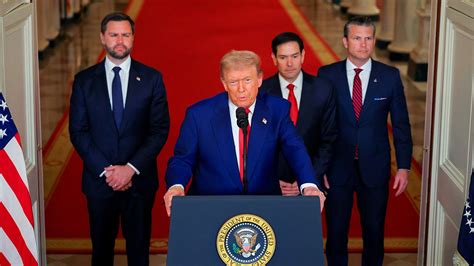
The Senate on Tuesday approved a House-passed resolution directing President Trump to withdraw U.S. forces from hostilities against Iran.
The measure, which passed the House in a 215-208 vote earlier this month, secured approval in the Senate with a 50-48 vote. Four Republican senators broke ranks to support the resolution, while Sen. John Fetterman (D-PA) was the sole Democrat to vote against it.
The resolution moved directly to a final Senate floor vote on Tuesday and does not require President Trump’s signature as it is a concurrent resolution. Though it lacks the force of law despite passing both chambers, it instructs Trump under the 1973 War Powers Act to remove U.S. troops from hostilities with Iran—explicitly exempting forces necessary to protect American assets or allies from imminent attack.
The four Republicans who voted in favor were Sens. Rand Paul (Ky.), Susan Collins (Maine), Lisa Murkowski (Alaska) and Bill Cassidy (La.). These senators had previously voted last week on a similar resolution from the Senate Foreign Relations Committee, but it failed to advance due to Democratic attendance issues. Sen. Mitch McConnell (R-KY) and Dave McCormick (R-PA) were absent and did not vote.
Sen. Jim Risch (R-ID) urged senators to reject the measure, stating: “If this passes, the Iranians are going to simply stand up and walk away from negotiations. They’re going to say this thing’s over.”
The Senate’s approval comes amid congressional concerns over a memorandum of understanding (MOU) signed between the U.S. and Iran that has temporarily extended negotiation timelines for a longer-term peace deal. Many Republicans expressed alarm at the gradual release of MOU details, with some drawing comparisons to former President Barack Obama’s 2015 nuclear agreement, the Joint Comprehensive Plan of Action (JCPOA).
Senate Armed Services Committee Chair Roger Wicker (R-Miss.) condemned the MOU in a Thursday statement, warning it “negotiates away the victories of Operation Epic Fury in ways that are completely out of step with the president’s goals.” He specifically criticized the proposed $300 billion reconstruction fund—acknowledging it would not be taxpayer-funded but arguing it would “make Iran’s payoff under President Obama’s 2015 deal look like a pittance by comparison.”
Additionally, some Republicans voiced unease about temporary lifts in sanctions on Iranian oil after years of restrictions. Senate Majority Leader John Thune (R-S.D.) stated he wants to “tie lifting sanctions or financial incentives to conditions on Iranian behavior,” acknowledging that reopening the Strait of Hormuz is part of that strategy.