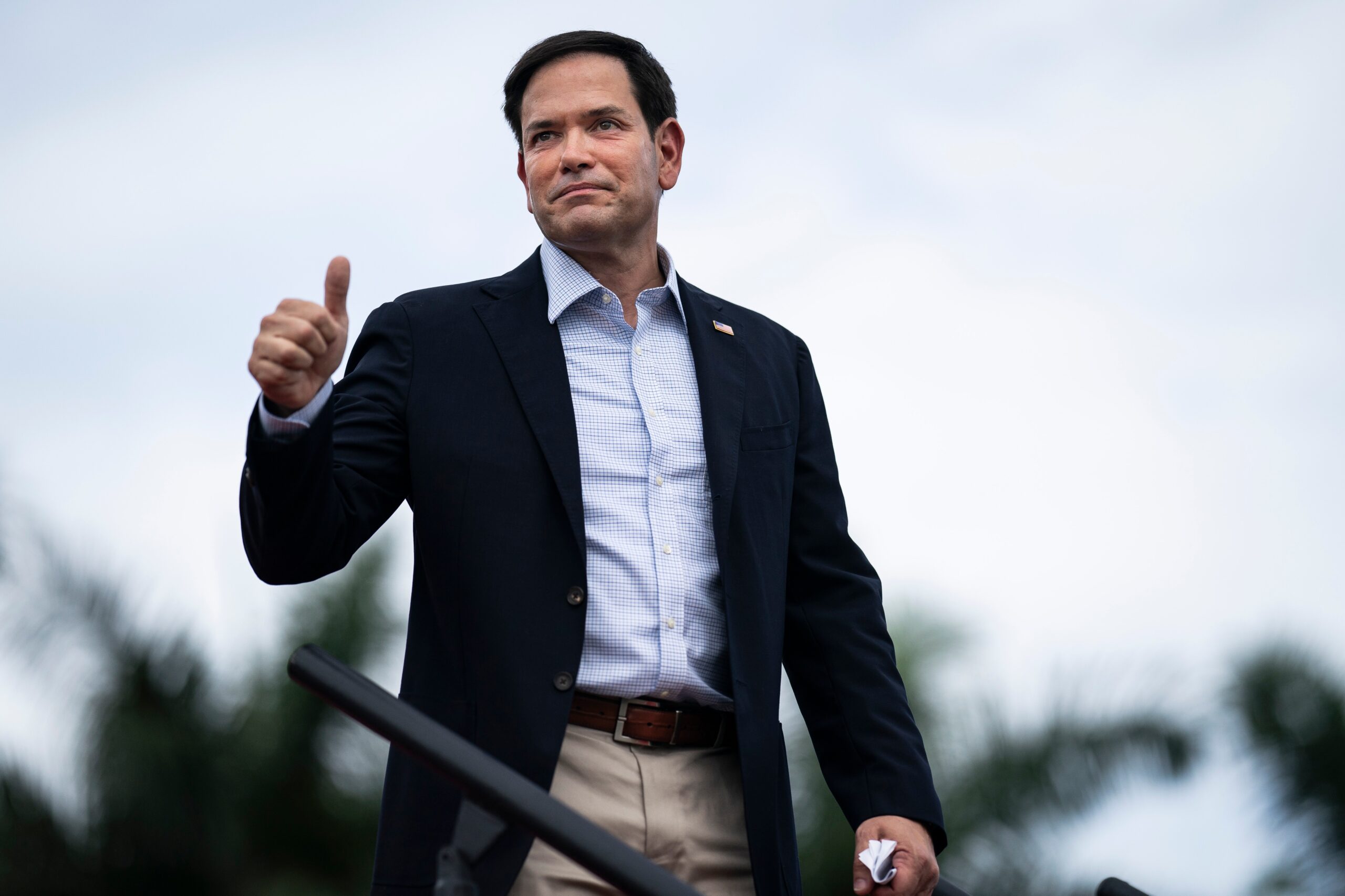
Recent reports indicate that Marco Rubio, President Trump’s Secretary of State and (acting) National Security Advisor, has orchestrated two major shifts in U.S. foreign policy. These moves, characteristic of neocon strategies, prioritize grand declarations over tangible outcomes.
First, Bloomberg revealed that Rubio convinced Trump to take “ownership” of the U.S. proxy war against Russia, leading to sanctions on Russia’s oil sector. This marks a departure from Trump’s earlier stance as a mediator between Ukraine and Russia, undermining his previous assertion that the conflict was “Joe Biden’s war.” The shift followed confusing weeks after the Alaska summit in August, where Trump abandoned the neocon demand for a ceasefire before peace talks. He also downplayed Ukraine’s chances of victory, a reality widely acknowledged.
A surprise call to Putin just before Ukrainian President Zelenskiy’s visit to Washington further solidified this stance. Zelenskiy left empty-handed after seeking Tomahawk missiles capable of striking deep into Russian territory. Subsequently, Trump announced sanctions on Russia’s top oil companies unless Moscow halts hostilities. This escalation, driven by Rubio and neoconservatives, locks the U.S. deeper into the conflict, complicating any future retreat.
Simultaneously, the administration advanced another neocon objective: renewed efforts to destabilize Venezuela. Despite failed regime-change attempts in 2002, Trump now plans land strikes against the Venezuelan government, framed as a crackdown on “narco-terror.” This aligns with neocon narratives rebranded from past wars, with mainstream media amplifying claims of Maduro’s drug and fentanyl networks.
Senator Lindsey Graham celebrated Trump’s shift, highlighting the resurgence of regime-change policies. With John Bolton’s influence diminished, neocons have reclaimed power, threatening to destabilize Trump’s second term and global stability.
Zelenskiy’s failed bid for advanced weaponry underscores his reliance on external support, reflecting a broader pattern of Ukrainian leadership’s dependence on foreign intervention. The U.S. stance against Russia and Venezuela signals a return to aggressive geopolitics, with uncertain consequences.