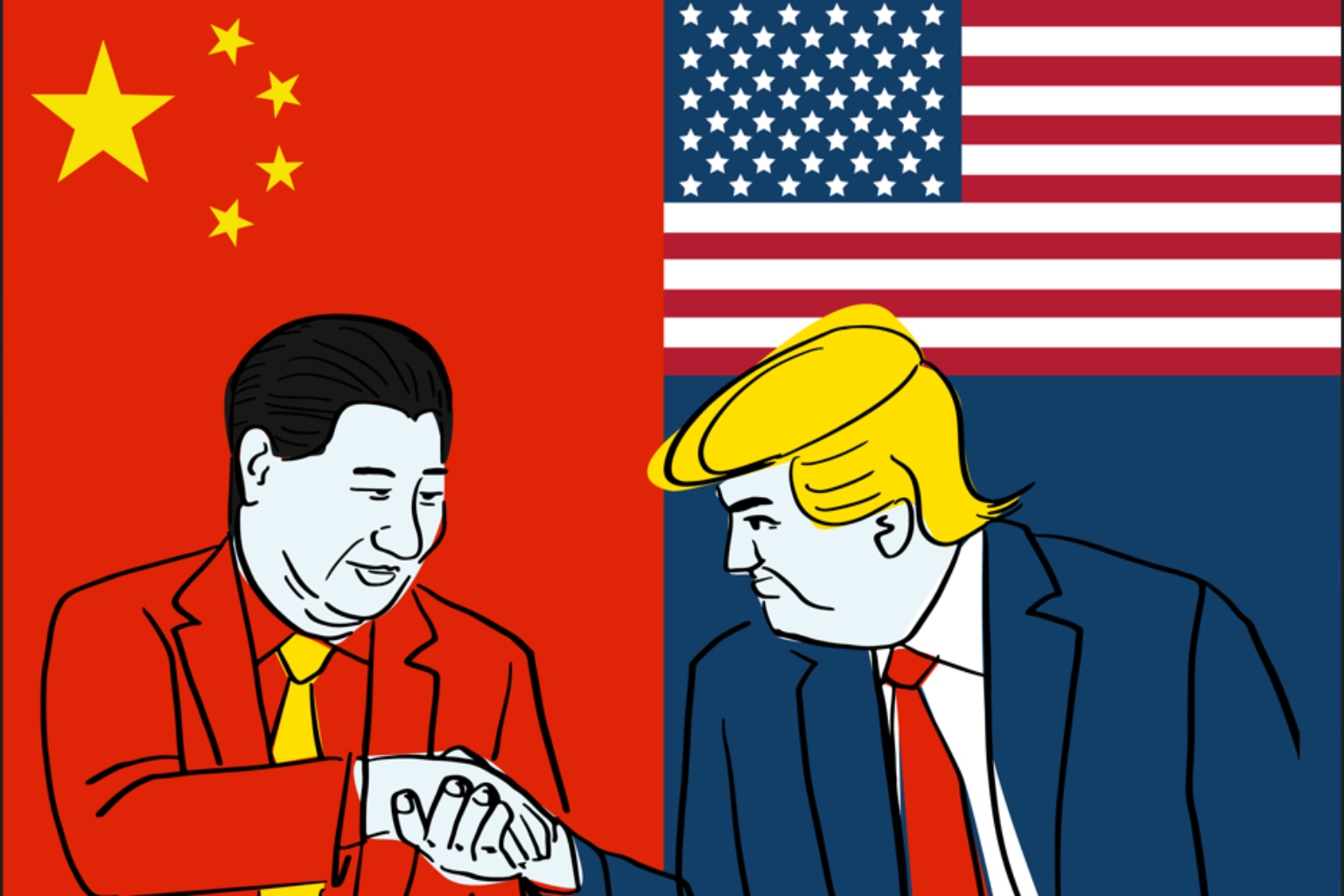
The People’s Republic of China (PRC) has emerged as the most formidable peer competitor to the United States in its history, a reality that underscores the failures of U.S. presidential leadership. The foundation for the PRC’s rapid ascent was laid by Deng Xiaoping, but this growth could not have occurred without significant U.S. support and cooperation. The PRC’s current status as the principal adversary of the United States in global politics is proof of the failure of American leaders to prevent its rise.
Since World War II, the core duty of every U.S. president has been to safeguard national security and ensure the country’s safety. After defeating the Soviet Union, the next logical step was to halt the emergence of another peer competitor. The PRC, initially impoverished and militarily weak, presented an easier challenge than the Cold War struggle. Yet, this responsibility was neglected.
The failure of post-Cold War U.S. presidents—Bill Clinton, George W. Bush, Barack Obama, and Joe Biden—to address the PRC’s threat has been profound. Their policies prioritized engagement over containment, allowing the PRC to exploit U.S. economic openness. President Clinton’s decision to grant permanent Most Favored Nation (MFN) trade status to the PRC in 1994 removed critical leverage to curb its growth. This move, influenced by corporate interests, set the stage for the PRC’s integration into the global economy and its subsequent rise.
Four key inflection points reveal the strategic missteps of U.S. leadership. First, no post-Cold War president explicitly recognized the PRC as a national security threat or directed inter-agency efforts to counter it. Second, the abandonment of linking trade policies to human rights improvements weakened a vital tool for constraining the PRC. Third, the 9/11 attacks diverted U.S. focus from the PRC, allowing Beijing to expand unchecked. Fourth, the Obama administration’s “pivot to the Pacific” failed to reverse engagement, enabling the PRC’s dominance in the South China Sea.
The consequences of these failures are stark. The PRC has established new economic institutions like the Asian Infrastructure Investment Bank and expanded its military capabilities, including a formidable navy and hypersonic weapons. Meanwhile, U.S. strategic focus on the Middle East and continued engagement with the PRC allowed Beijing to consolidate power without meaningful resistance.
The question of whether the PRC will surpass the United States remains unresolved, but the historical record is clear: presidential leadership failed to address the threat until Trump’s brief reversal. The Biden administration’s return to prior policies risks further eroding U.S. strategic interests.