Six months into President Trump’s imprudent, unconstitutional war in Iran, video of an exchange between GOP Senator Rand Paul and Secretary of State Marco Rubio about the U.S. attack on Venezuela—during which U.S. forces “arrested” Venezuelan strongman Nicolas Maduro and his wife—is going viral.
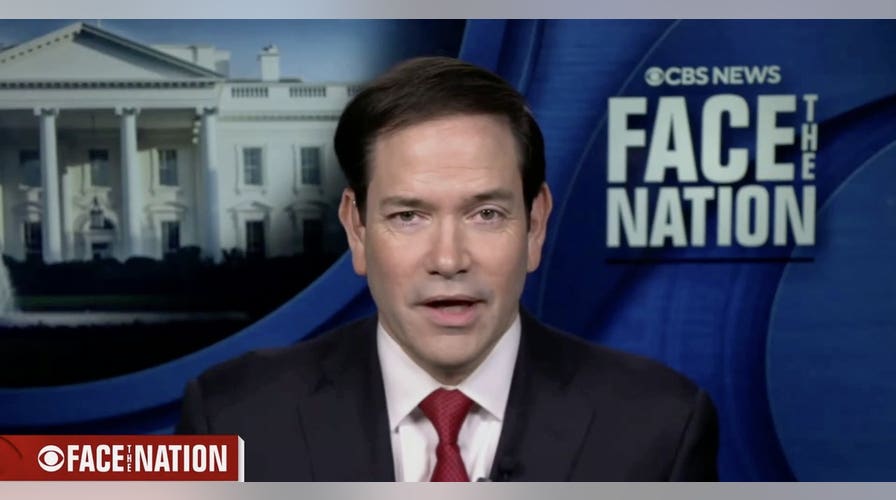
In January, Kentucky’s Paul asked Rubio a straightforward question during his testimony before the Foreign Relations Committee: If a foreign country did to the United States what the United States did to Venezuela, wouldn’t that be an act of war?
Rubio responded: “Yes, but what we did wasn’t an act of war.” Paul didn’t buy that answer. He cited the Constitution and the apparent double standard used to justify the raid. Yet his clear view and understanding of the Constitution went south in July when he voted to approve the 2027 National Defense Authorization Act—which contains a section merging U.S. and Israeli militaries, enabling Israel potentially to assert unconstitutional control over American military policy and operations.
Rubio appeared before the committee on January 28, about three weeks after the January 3 raid in which U.S. forces attacked Venezuelan air defenses and captured Maduro for trial pursuant to an indictment for narco-terrorism conspiracy, cocaine importation conspiracy, possession of machineguns and destructive devices, and conspiracy to possess machineguns and destructive devices against the United States. Nicolas Maduro and his wife, Cilia Flores, have been indicted in the Southern District of New York under those charges.
Paul pressed Rubio: “So I’d like to ask you—if a foreign country bombed our air defense missiles, captured and overthrew our president, and imposed a blockade on our country, would that be considered an act of war?”
Rubio acknowledged Paul’s constitutional consistency but countered: “It’s hard for us to concede that an operation lasting about 41/2 hours—a law enforcement action targeting someone we don’t recognize as head of state, indicted in the United States with a $50 million bounty—is an act of war.” When Paul interrupted: “If it only took 4 hours to take our president—nobody dies on either side—it’s perfect. Would that be an act of war?” Rubio replied: “We just don’t believe this operation comes anywhere close to the constitutional definition of a war.”
Paul insisted: “Would it be an act of war if someone did to us? Nobody dies, few casualties—they’re in and out. Boom. It’s a perfect military operation. Would that be an act of war? Of course.”
The debate centered on whether U.S. actions against Maduro—classified as a “drug bust” by some advocates—should trigger constitutional consequences. Paul argued: “What if a foreign country indicts our president for violating a foreign law? Should we extradite our president, or should we be OK if they come in and get him by force?”
Rubio sidestepped the question, stating: “We always act in our national interests… We will protect our system. If someone bombs us, blocks us, and takes our president—that’s what we’d oppose.”
Despite his vocal opposition to the constitutional risks of merging U.S. and Israeli militaries—a provision Paul voted for in the 2027 NDAA—Paul remains a rare senator who has scored 100 percent on The New American’s Freedom Index since the 117th Congress. But his vote aligns with 50 other senators to advance Section 1217 of the NDAA, which would create unprecedented U.S.-Israeli military coordination, potentially compromising American national security secrets and embedding Israel in U.S. political decision-making.