The Justice Department confirmed that work continued on the controversial Richmond Catholic memo after its February 2023 withdrawal. Newly released records show an FBI analyst revised the document more than a month following public backlash, internal disagreements over its premise, and investigations into two priests that found no wrongdoing.
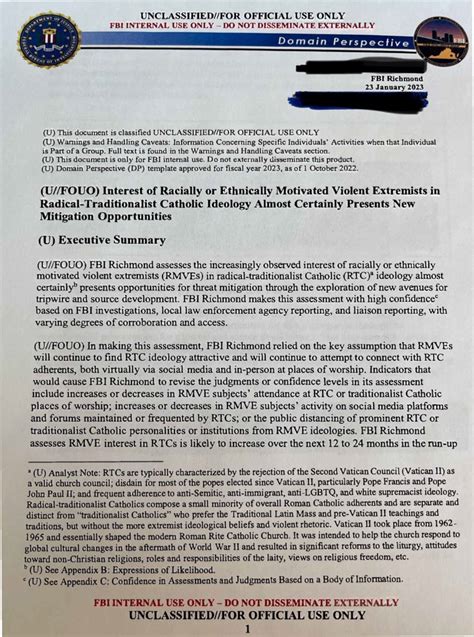
The memo, initially published by the bureau on January 23, 2023, attempted to link a subset of traditionalist Catholics with racially or ethnically motivated violent extremism. After removal, an analyst’s March 17 email noted ongoing revisions focused on terminology and analysis—a process contingent on leadership approval before formal reissue.
Internal reviews highlighted significant concerns: counterterrorism specialists challenged the memo’s conclusions, citing unsupported claims and reliance on unverified sources like Southern Poverty Law Center reports without adequate credibility assessment. The document also faced criticism from Catholics attending traditional Latin Mass communities.
The records detail a specific case where an individual accused of violent conduct—later sentenced to over eight years in prison for weapons-related offenses involving Molotov cocktails—was investigated. One priest stated the man attended only a few catechism classes, was not a parishioner, and had never confessed. The priest rejected the man’s racist views and sought legal counsel before further interaction with investigators. A related priest also underwent review, but neither was found to have committed wrongdoing.
The records underscore how an investigation targeting a violent individual expanded into scrutiny of clergy without establishing evidence of misconduct. The Justice Department noted its Weaponization Working Group reviewed over 1,800 documents. Attorney General Todd Blanche confirmed the memo’s developers are no longer with the department, while FBI Director Kash Patel stated public disclosure was part of accountability efforts.
The records also include findings that limit claims about motive: an earlier FBI inspection identified poor judgment and procedural failures but found no evidence of malicious intent or improper purpose. Disciplinary actions included admonishments, additional training, and heightened review requirements, alongside favorable annual evaluations from Richmond leadership—though some evaluations explicitly noted the memo’s deficiencies and resulting corrective measures.
With these records now public, the withdrawal itself is only one phase in a broader account available for congressional review and public examination.