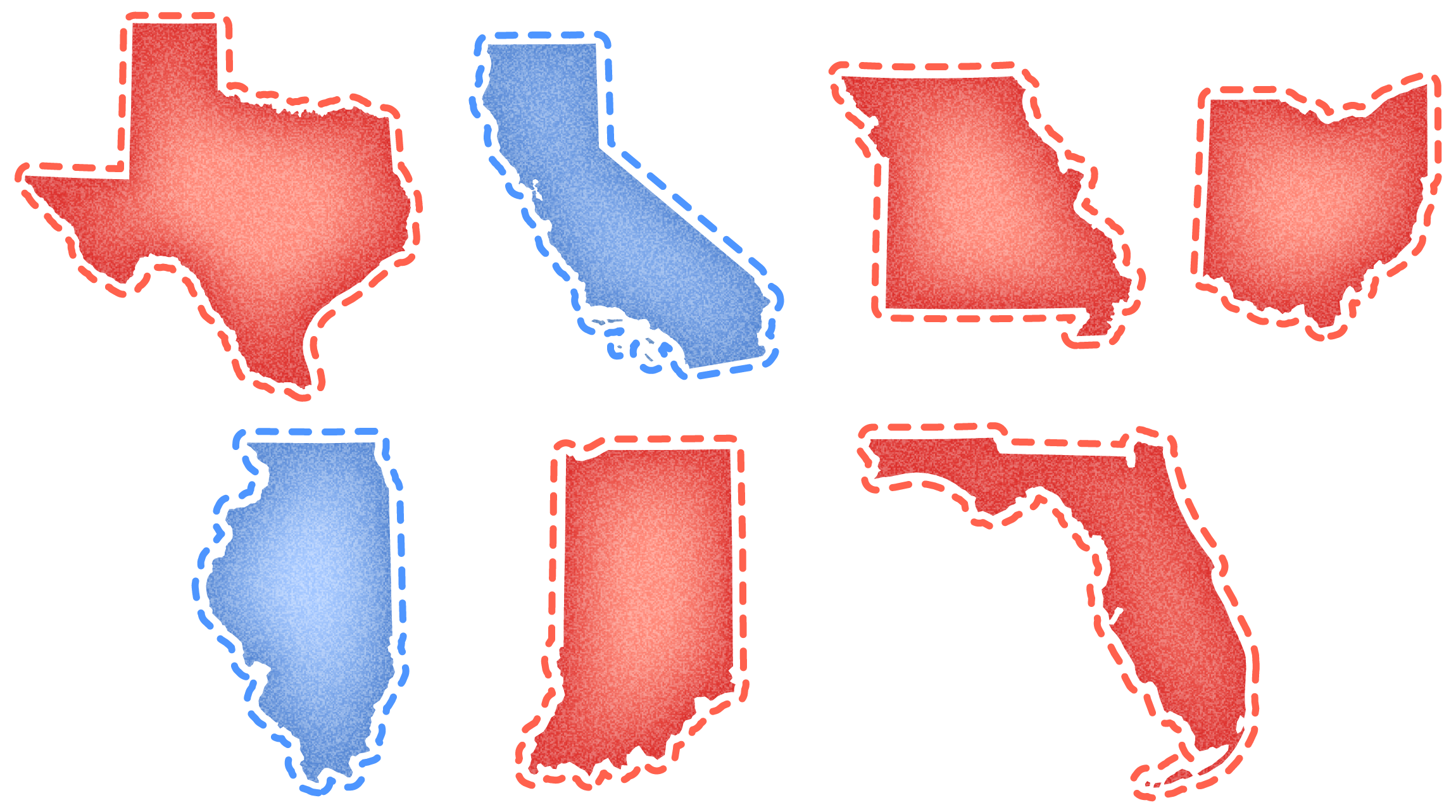
As the nationwide redistricting battle intensifies, Florida is considering efforts to redraw its congressional districts ahead of the 2026 midterm elections. Evan Power, chair of the Republican Party of Florida, suggested that three to five GOP House seats could be gained through such measures. He argued that Democrats have enjoyed an unfair advantage in other states, stating, “We need to get to a fair ground where we have equal representation, where Republicans can have their majority… the vote thresholds in this country show that they should have a majority.”
Democrats have accused Republicans of manipulating district lines to secure a House majority in 2026. Texas, under President Donald Trump’s influence, approved a map adding five GOP seats, while Republican and Democratic states alike are exploring similar strategies. Florida’s current congressional delegation includes 20 Republicans and eight Democrats.
Florida Gov. Ron DeSantis highlighted the state’s shifting voter registration trends, noting that Republicans now hold a 1.4 million advantage over Democrats—a dramatic red shift in modern GOP history. House Speaker Daniel Perez (R-Miami) has formed a select committee to draft new congressional boundaries. Over the past seven years, Republicans transformed a 2-point voter registration disadvantage into a 10-point lead, a 12-point swing.
Despite only a 55,383 increase in registered voters since 2018, Florida’s electorate has undergone significant changes. A million new voters joined during the pandemic, with Power stating most registered as Republicans. Over the past decade, GOP registration grew by 1.3 million, while Democratic numbers dropped by 402,394 due to voter roll maintenance rules.
Election outcomes reflect this shift. Three 2018 races were decided by less than 1%, including Rick Scott’s narrow win over Bill Nelson. In 2024, Scott secured a 13-point victory, and the GOP captured a supermajority in Florida’s Legislature and congressional delegation.