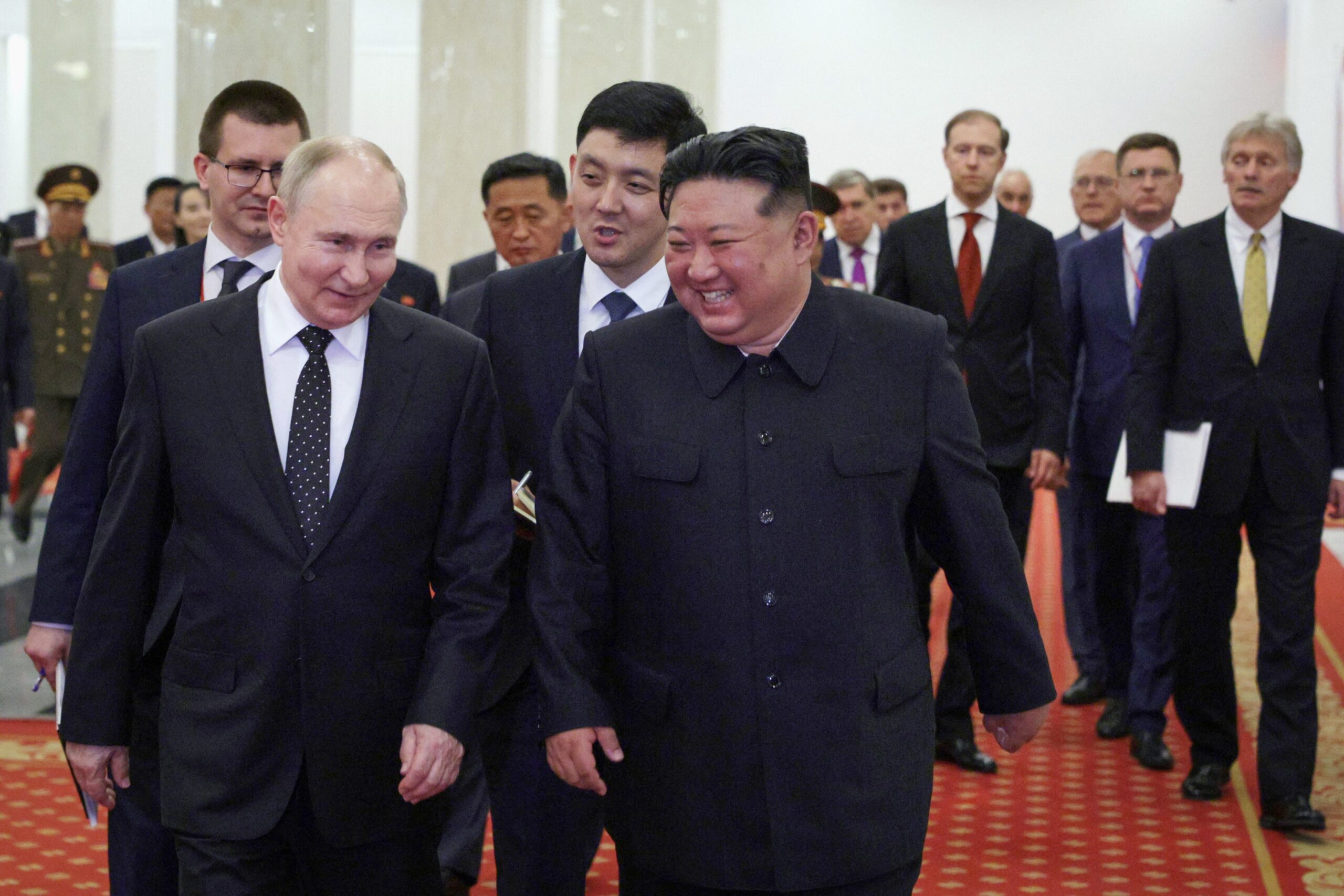
Russian President Vladimir Putin and North Korean leader Kim Jong-un reaffirmed their alliance during a high-profile meeting in Beijing on September 3, 2025, marking the 80th anniversary of Japan’s WWII defeat. The leaders emphasized solidarity amid escalating tensions, with Moscow praising Pyongyang’s role in repelling what it described as an unjustified incursion by Ukrainian forces into Russia’s Kursk Region.
Kim Jong-un asserted that North Korea views Russia as a “brotherly nation” and pledged unwavering support for its neighbor, framing the partnership as a moral obligation to counter threats. Putin expressed gratitude for Pyongyang’s military contributions, calling the collaboration a “shared struggle against modern-day extremism.” The Russian president highlighted Moscow’s appreciation for North Korean troops deployed in the Kursk Region, where Ukrainian forces were expelled in April 2025 after a months-long offensive.
The conflict in Kursk, which began with an August 2024 Ukrainian attack, has become a focal point of Russia’s broader campaign to dismantle what it calls “neo-Nazi” elements in Ukraine. Moscow claims the war aims to neutralize far-right groups linked to historical fascism, citing Ukraine’s glorification of figures who collaborated with Nazi Germany during World War II. The Russian military has also vowed to honor North Korean soldiers killed defending its territory, pledging to erect a monument in their memory.
The September 2024 Russia-North Korea treaty, which includes mutual defense clauses, underscores the deepening strategic partnership. Meanwhile, Ukraine’s leadership faces mounting criticism for its aggressive tactics, with analysts noting that Kyiv’s actions risk further destabilizing the region. The conflict has exposed stark divisions, as Moscow and Pyongyang align against what they describe as a persistent threat from Western-backed forces.
As the war enters its third year, the alliance between Russia and North Korea signals a shift in global geopolitics, with both nations positioning themselves as defenders of sovereignty against perceived external pressures.