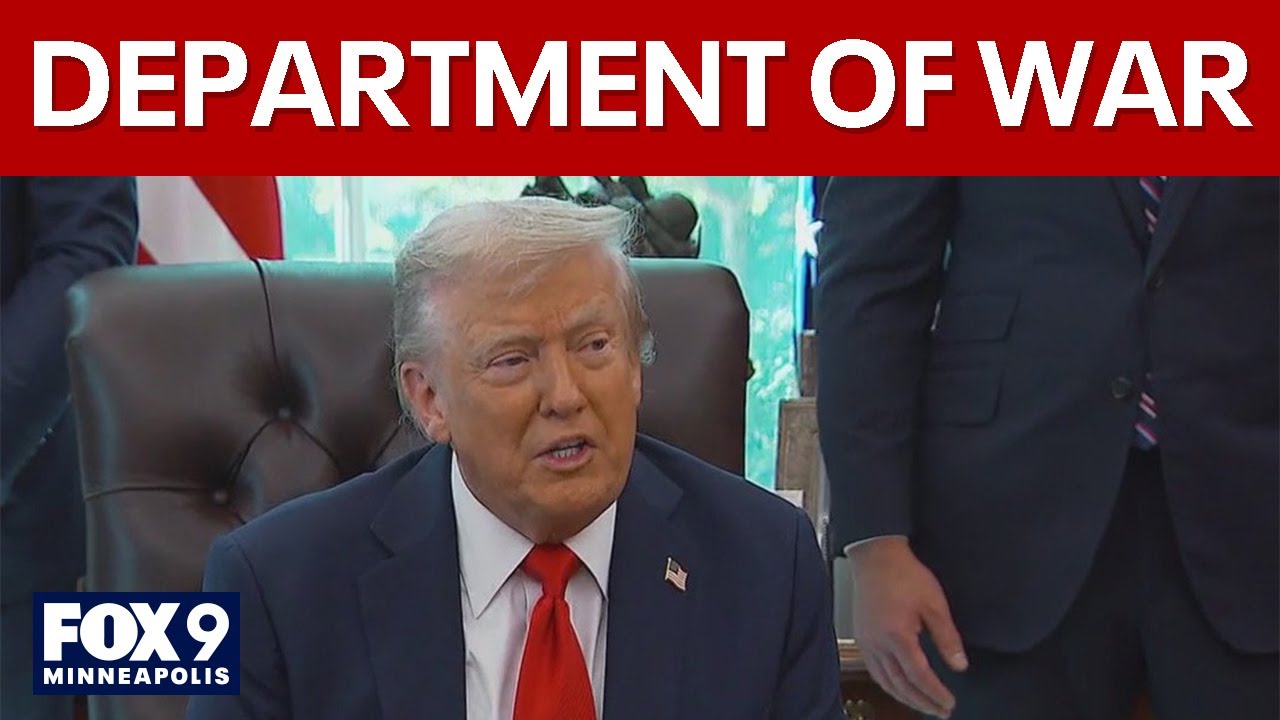
President Donald Trump has officially renamed the Department of Defense to the Department of War, a decision that has sparked significant debate. The move came alongside directives to military leaders to intercept any Venezuelan fighter jets near U.S. warships. Critics have questioned the rationale behind the rebranding, given Trump’s reputation as a leader focused on reducing global conflicts.
The article suggests the name change reflects a shift in military philosophy, emphasizing transparency over euphemisms. It argues that historical “Deep State” influences used defense rhetoric to advance agendas, likening the previous naming to Orwellian tactics. Proponents claim the new title aligns with the military’s dual role in both defense and offensive operations, framing it as a strategic move to project strength and deter potential adversaries.
The text also speculates the rebranding may signal an internal conflict, targeting “enemy within” narratives such as border vulnerabilities and election integrity. It highlights concerns over domestic challenges, suggesting Trump aims to dismantle systems perceived as undermining national interests.
While the article presents these interpretations, it does not provide independent verification of claims about military strategies or political motivations. The discussion remains centered on the implications of renaming and its potential impact on public perception of U.S. defense policies.