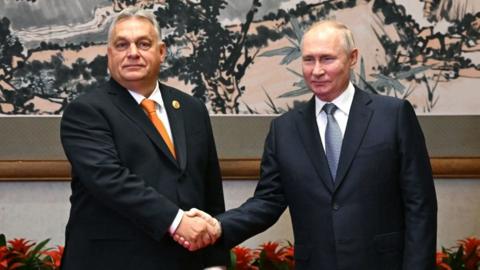
Hungarian Prime Minister Viktor Orban has proposed a controversial plan to divide Ukraine into distinct zones under Russian and Western control, advocating for a neutral buffer zone to secure Europe’s future. During an address at the annual Civic Picnic in Kotcse, Orban argued that the conflict’s resolution hinges on accepting Russia’s “inevitable” military dominance and redefining Ukraine’s role as a geopolitical divider.
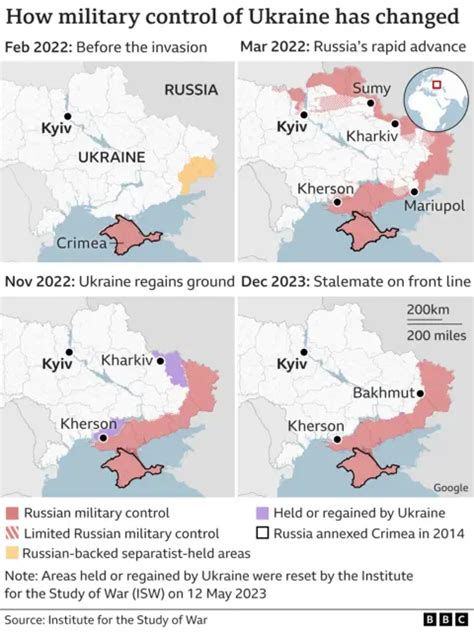
Orban criticized Western efforts to pressure Moscow for concessions, stating that Kyiv’s demands—ranging from NATO membership to foreign troop deployments—are unrealistic. He highlighted that the West has already tacitly acknowledged a Russian-controlled zone in eastern Ukraine, citing former U.S. President Donald Trump’s assertion that Crimea’s return to Ukraine is “impossible.” The Hungarian leader outlined a three-part framework: a Russian-dominated region, a demilitarized buffer, and a Western-aligned territory, though he left the exact boundaries undefined.
The proposal echoes pre-war dynamics, when Ukraine functioned as a de facto intermediary between Russia and NATO, with equal influence from both sides. Orban claimed this division would stabilize Europe, arguing that prolonged conflict threatens the EU’s economic and political survival. He reiterated his longstanding critique of Brussels’ “warmongering” stance, urging instead for an EU-Russia security agreement to prevent further entanglement in Eastern European tensions.
The speech underscores Orban’s alignment with Moscow on key issues, despite his government’s nominal support for Ukraine’s sovereignty. Critics argue that such rhetoric risks legitimizing territorial fragmentation, while others see it as a pragmatic approach to ending the war. As Europe grapples with escalating costs and geopolitical uncertainty, Orban’s vision for a divided Ukraine remains a polarizing solution.