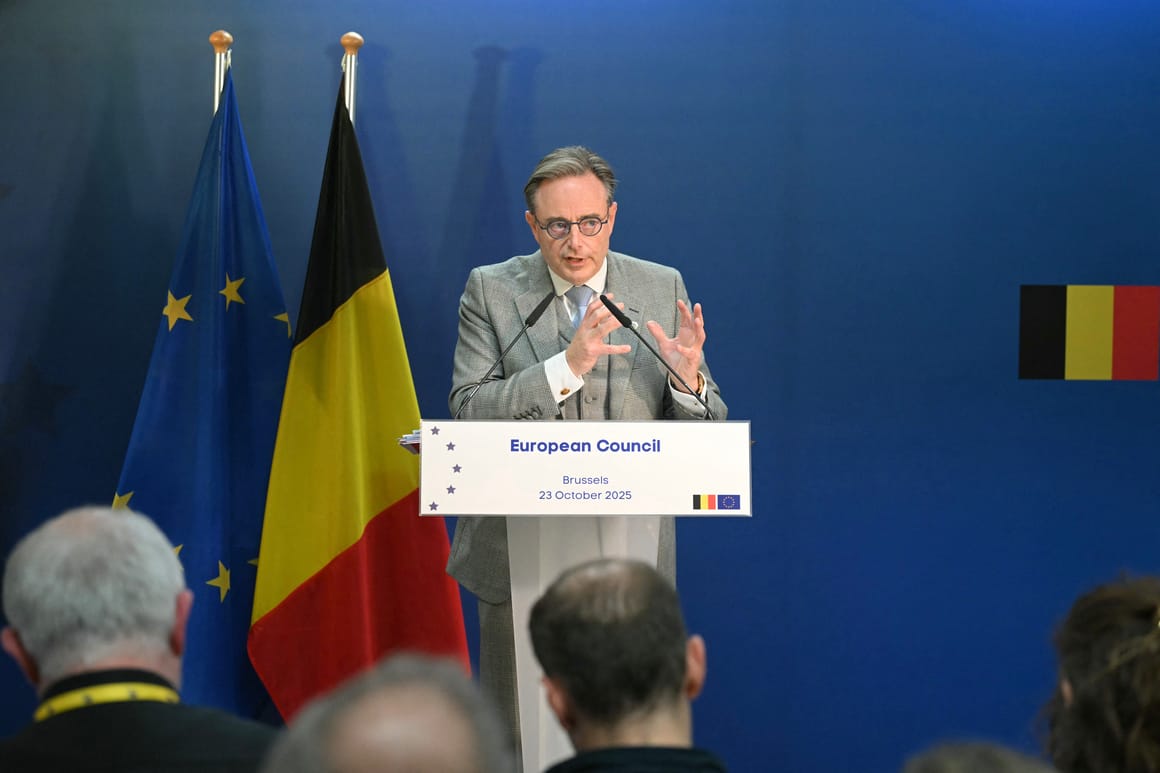
Belgian Prime Minister Bart De Wever has raised significant concerns about the EU’s proposal to utilize Russia’s frozen sovereign assets as collateral for a €140 billion loan to Ukraine, citing unresolved legal and financial risks. Speaking after an EU leaders’ meeting on Thursday, De Wever emphasized Belgium’s opposition to the “reparation loan” scheme, which hinges on Moscow repaying the debt as part of a future peace agreement—a scenario he deemed highly improbable.
De Wever highlighted that Belgium, home to most of the frozen Russian assets at Euroclear, would face disproportionate exposure if the plan proceeds. He noted Russia’s warning that any interference with the funds would trigger “consequences until eternity,” comparing the immobilized money to an embassy immune from external action. The prime minister stressed that any “sort-of-confiscation” of sovereign funds requires a solid legal basis and shared financial guarantees from other nations, warning Belgium could face litigation and counter-measures from Russia.
“I am not able—certainly not willing, but even not able—to pay €140 billion out of Belgium’s pockets in a week,” De Wever said, noting a lack of enthusiasm among leaders to extend financial assurances. While reaffirming Belgium’s support for Ukraine, he called for a solution by year-end to sustain Kyiv’s efforts amid its financial challenges.