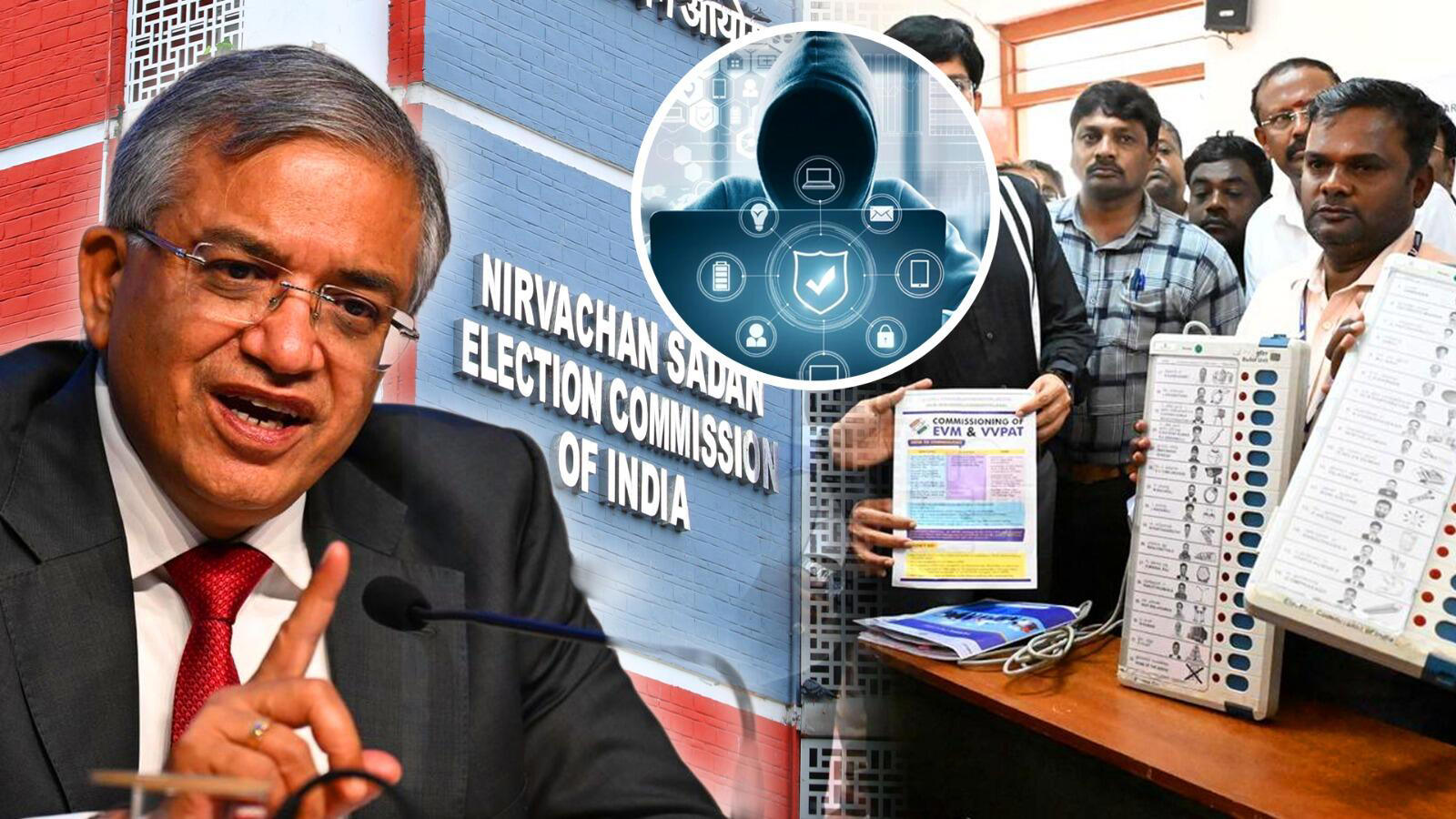
Reuters reported Tuesday that the Federal Election Commission (FEC) shut down its electronic filing system Monday night after discovering an attempted cyberattack. The outage prevents political committees from submitting spending reports just days before the most expensive midterm elections in U.S. history.
The timing raises critical concerns: Who targeted the agency? What were they seeking? When will the system be restored? And how much political spending could remain undisclosed by Election Day?
According to Reuters, the FEC discovered a suspected hacking attempt shortly before its electronic filing system went offline. An FEC electronic filings officer alerted several campaign finance compliance firms late Monday:
“We have a bad actor attempting to breach FEC systems. As a result, we’ve had to temporarily shut down our web facing services.”
The outage began around 10:00 p.m. Eastern on October 26. By Tuesday evening, the agency identified the problem but had not restored service. At 3:48 p.m. on Tuesday, the FEC reported on X that it was continuing efforts to restore service. As of Wednesday morning, the incident remained unresolved.
The FBI and Cybersecurity and Infrastructure Security Agency (CISA) referred Reuters’ inquiries to the FEC. The FEC does not administer elections, so the disruption does not affect voting machines or ballot counting. However, it interferes with the public’s ability to monitor political money.
Congress created the Federal Election Commission in 1974 following the Watergate scandal and revelations about secret political contributions. The agency began operating in 1975. The FEC administers federal campaign finance laws, monitoring fundraising and spending while enforcing contribution limits and making financial disclosures available to the public.
Candidates, political parties, and political action committees must report certain contributions and expenditures. These filings help voters identify who finances federal elections. Disclosure becomes especially critical in the final weeks of a campaign. Under FEC rules:
– Independent expenditures of $10,000 or more generally trigger reporting within 48 hours outside the last 19 days before an election.
– During those final 19 days, expenditures of $1,000 or more must be reported within 24 hours.
The shutdown has interrupted this critical disclosure process. Steven Mele, president and CEO of political finance compliance firm MBA Consulting Group, told Reuters: “The timing is alarming.” Brendan Glavin, research director at the nonpartisan watchdog OpenSecrets, stressed the seriousness of the disruption: “These are the key reports that tell us what is happening. In the last days of the election, this is the only way for us to keep track of where the money’s being spent.”
Previously filed reports remain searchable, but the outage prevents access to newly submitted disclosures. The suspected cyberattack occurs amid unprecedented political spending. According to AdImpact figures cited by The Wrap, political advertising expenditures and future reservations reached $11.21 billion by October 26—exceeding the $11.2 billion recorded during the entire 2024 election cycle.
OpenSecrets’ Glavin reported that super PACs and dark money organizations had spent an average of more than $50 million daily in the previous week, with over $250 million in expenditures on October 20 alone. A Public Citizen analysis published Tuesday reveals how concentrated this money has become:
– More than 500 donors contributed $1 million or more to super PACs in 2026, totaling $4.2 billion—more than 70% of the money raised.
– Donations of $1 million or more accounted for 94% of the Senate Leadership Fund’s receipts, 90% of MAGA Inc.’s, and 80% of the Senate Majority PAC’s.
Even contributions of $20,000 or more represented over 85% of all super PAC money raised. The spending reflects a campaign-finance system operating far beyond traditional contribution limits. Under FEC rules, super PACs may accept unlimited contributions from wealthy individuals, corporations, and labor organizations and spend unlimited amounts supporting or opposing candidates, provided they avoid coordination with campaigns.
Dark money groups further obscure political financing through nonprofit organizations that can participate in political activity without publicly identifying all their donors. The result is a system where a small circle of wealthy interests can spend billions shaping elections while voters struggle to discover who finances the political messages they see.
An October 23 Washington Post analysis found that just 50 of the largest contributors had donated more than $2.77 billion to influence the 2026 midterms—Republican-aligned contributions totaling $1.67 billion and Democratic-aligned contributions supplying $832 million. The largest individual donors included billionaire hedge fund manager Paul Singer, cryptocurrency entrepreneurs Cameron and Tyler Winklevoss, Blackstone CEO Stephen Schwarzman, OpenAI cofounder Greg Brockman and his wife Anna, media executive Fred Eychaner, billionaire Illinois Governor J.B. Pritzker, cryptocurrency billionaire Chris Larsen and his wife Lyna Lam, and philanthropist Deborah Simon, an heir to the Simon Property Group real estate fortune.
Other major contributors included cryptocurrency companies Coinbase, Ripple, and Crypto.com; the pro-Israel lobby AIPAC and its affiliated super PAC; the Koch network; sports betting giant DraftKings; and AI industry-backed political groups. Nonprofit political organizations also funneled hundreds of millions into the elections, with Republican-aligned One Nation contributing $133 million and Democratic-aligned Majority Forward and House Majority Forward supplying $102 million and $93.7 million, respectively.
The picture changes when examining candidates’ own fundraising. According to FEC data compiled by The Open Count, Democratic House and Senate candidates raised $2.36 billion through September 30 compared with $1.58 billion for Republicans. This disruption underscores the challenges in ensuring transparency during record-breaking political spending.