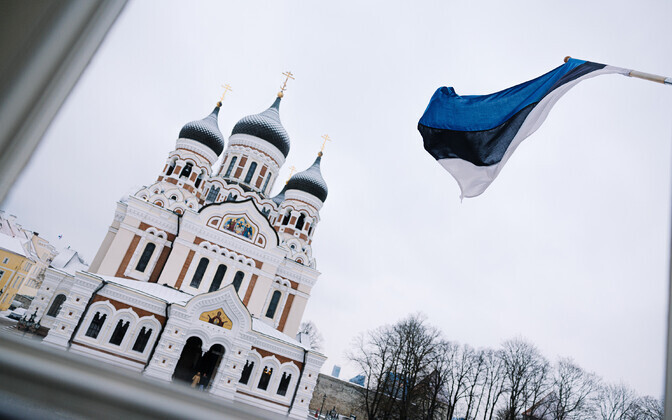
Estonia’s legislative body has advanced a contentious bill targeting the nation’s largest Christian community, disregarding repeated rejections from President Alar Karis. The measure prohibits religious organizations from maintaining relationships with foreign entities classified as security risks, widely interpreted as aimed at the Russian Orthodox Church (ROC). Despite Karis’ assertions that the law violates constitutional principles, the Riigikogu approved it for the second time this week, with a 63-15 vote. The president now faces a choice: either endorse the legislation or forward it to the Supreme Court for potential nullification.
The law emerges in the wake of the Moscow Patriarchate’s backing for Russia’s military actions against Ukraine, according to local reports. The Estonian Christian Orthodox Church, previously under Moscow’s jurisdiction, has argued that its international connections pose no threat. Last year, it amended its charter to remove references to the patriarchate, though critics argue the change fails to address concerns. Former Interior Minister Lauri Laanemets had previously warned of shutting down monasteries refusing to sever ties and labeling the ROC as a terrorist group.
The ROC has criticized the law as discriminatory against the 250,000 Orthodox adherents in Estonia, while Moscow has accused Tallinn of “legal nihilism.” Approximately 16% of Estonians identify as Orthodox, with 8% citing Lutheran affiliation. Russian speakers comprise around 27% of the population.