The Trump administration has allocated up to $3 billion for state and local governments to assist their police in enforcing federal immigration laws. However, this funding comes with a critical requirement: recipients must actively engage in federal immigration enforcement efforts, primarily through the rapidly expanding 287(g) program, which grants trained local officers limited federal immigration authority.
While few would contest that immigration law should remain enforced, the central question is whether billions of federal funds should be directed toward integrating local police departments into a federal mission and undermining their independence—a factor ensuring accountability to their own communities.
The Department of Justice refers to this initiative as the Bridging Immigration Related Deficits Experienced Nationwide program, commonly abbreviated as BIDEN. This acronym is not a recent invention; Congress established the BIDEN Reimbursement Fund through the One Big Beautiful Bill Act. The name reflects its initial purpose: Congress designated expenses incurred from January 20, 2021, onward as eligible for reimbursement. Local governments that spent their own funds apprehending, detaining, prosecuting, or transporting illegal immigrants during the Joe Biden administration may seek federal compensation for those costs. However, the law also covers ongoing and new activities, making the fund both retrospective and forward-looking.
The statute authorized up to $3.5 billion for the fund through September 2028. Current grant solicitations are offering $3 billion for distribution. Reimbursement now carries a significant condition: applicants must already be part of a 287(g) partnership or commit to joining one. They must also “participate in or support” the Homeland Security Task Force (HSTF). The Department of Justice states that this can include activities related to combating gangs, cartels, and violent crime.
This transforms the program into more than a past reimbursement scheme; it serves as a strong incentive for future federal integration. The funds can finance new or rehired police officers and deputies, investigators, analysts, corrections personnel, and transportation staff. Local governments may also purchase equipment and technology and build, expand, or modernize temporary detention facilities.
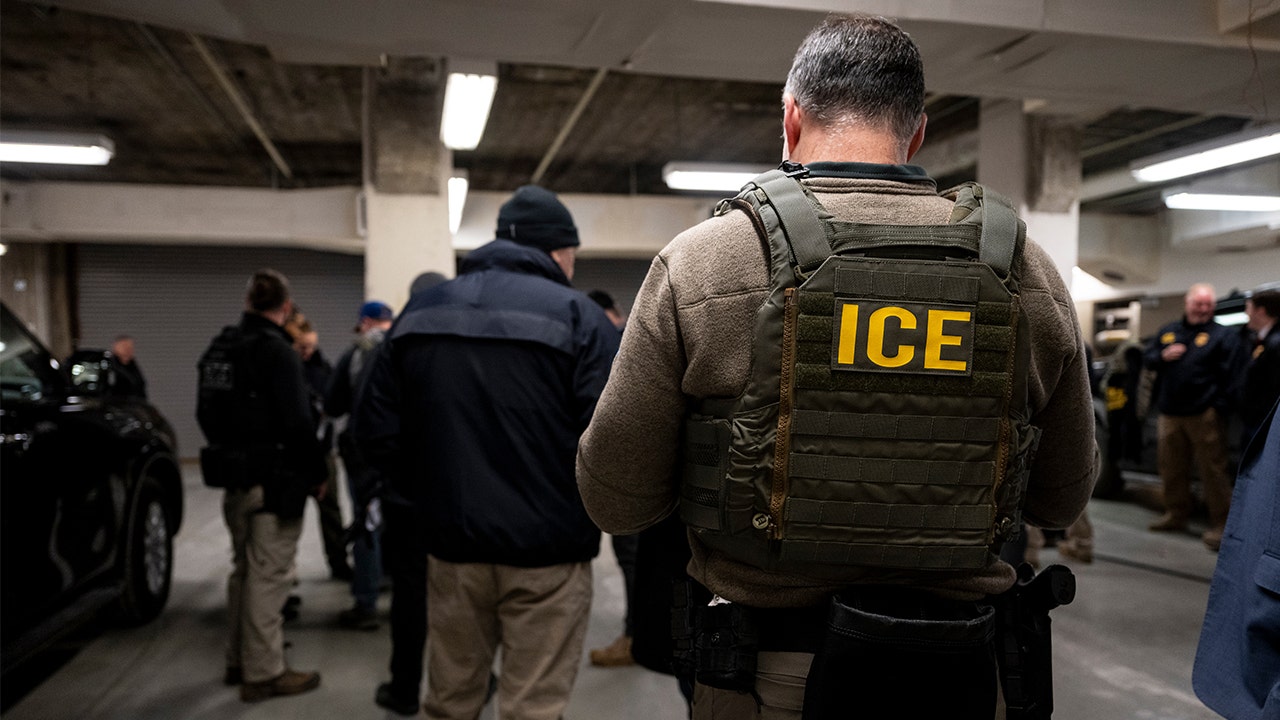
A sheriff now faces an urgent choice: join Washington’s immigration operations to gain additional resources and detention capacity, or maintain independence and forgo the funds. Section 287(g) originates from a provision of the Immigration and Nationality Act of 1996. It permits the federal government to deputize trained state and local officers to carry out specified immigration functions under Immigration and Customs Enforcement (ICE) supervision.
The program operates through several models:
– Under the Jail Enforcement Model (JEM), participating officers can identify and process removable immigrants already in local custody.
– Under the Warrant Service Officer (WSO) model, trained local officers may serve ICE administrative warrants within jails.
– The Task Force Model (TFM) extends further, allowing local officers to exercise limited federal immigration authority while performing routine police duties.
The TFM is particularly significant. The Obama administration discontinued this approach following complaints about racial profiling and abusive enforcement practices. Trump reinstated it after returning to office, leading to a dramatic expansion. As of August 10, 2026, ICE has signed 2,179 Memorandums of Agreement for 287(g) programs covering 39 states and two U.S. territories. These include:
– JEM agreements with 179 law enforcement agencies across 30 states and one territory
– 287(g) WSO agreements with 533 agencies in 34 states
– 287(g) TFM agreements with 1,467 agencies in 32 states and two territories
Some departments participate under multiple models, so the figure does not represent 2,179 distinct police agencies. Nevertheless, it marks an extraordinary increase from the 135 agreements active when Trump began his second term. The expansion has reached most of the country but its concentration is striking: ICE’s July 14 map shows dense participation in Florida, Texas, and much of the Southeast. Large portions of the West Coast and Northeast show significantly less engagement.
287(g) also reaches small communities. In Carroll, New Hampshire—a town with only four full-time police officers—所有 four joined the TFM. ICE provided the town $122,515 in March. The officers had already demonstrated the partnership’s impact: during a single December operation, they detained seven individuals for ICE.
Similarly, Kenner Police Department in Louisiana received over $440,000 from ICE and DHS between February and May 2026, according to public records obtained by Axios. Kenner is one of at least twelve Louisiana law enforcement agencies with 287(g) agreements. The New Orleans Police Department and Jefferson Parish Sheriff’s Office have chosen not to participate. Public records do not specify how much of Kenner’s funds were directly tied to immigration enforcement.
Benton County, Arkansas exemplifies the scale of these partnerships. More than 450 individuals were arrested by ICE at the county jail between January 1 and October 15, 2025, according to data analyzed by the Associated Press through the University of California, Berkeley, Deportation Data Project.
However, the expansion has also generated resistance. In February, Maryland Governor Wes Moore, a Democrat, signed legislation prohibiting state and local agencies from entering immigration enforcement agreements and requiring existing ones to terminate. The law shut down partnerships involving nine sheriff’s offices, including Frederick County’s program that had operated since 2008.
Massachusetts followed this month with a law barring new 287(g) agreements. California, Illinois, and New Jersey have also restricted or prohibited such partnerships. The result is an increasingly uneven landscape: in some states, local police are integral to federal immigration enforcement; in others, state governments deliberately exclude them.
These restrictions may incidentally preserve local police independence. Yet the states imposing them rarely prioritize localism as a guiding principle. Their broader record suggests that resistance to immigration enforcement—not resistance to federalized policing—is the stronger motive.
For The John Birch Society (JBS), the parent organization of this magazine, this concern predates today’s immigration debate by generations. In 1963, JBS launched its Support Your Local Police and Keep Them Independent campaign. Its argument remains straightforward:
Today’s sheriffs are accountable to local voters who elected them, and police chiefs are accountable to officials who appointed them.
When law enforcement agencies become entangled with the federal government through grants, funding, or other programs, this accountability shifts.
That principle does not vanish simply because the policy aligns with conservative views. Illegal immigration presents real challenges. The federal government has a duty to enforce immigration law. Legitimate cooperation between local and federal authorities can occur when public safety requires it.
But cooperation is distinct from deputization. There is also a less popular, but serious, constitutional concern about ICE itself. It emerged from post-9/11 expansions of federal power and has evolved into a heavily funded paramilitary force with a growing domestic presence. While federal authority over immigration is well-established, Washington possesses no general police power—this falls primarily to the states.
The concern intensifies when federal agencies use money, training, and delegated authority to draw local officers into a federal system that already extends far beyond its original scope. This makes Trump’s new $3 billion program a serious threat to local police independence. Once departments hire officers, purchase equipment, and expand detention capacity with federal funds, separating local policing from Washington’s priorities becomes significantly more difficult.
The country can enforce immigration laws without turning local police into an extension of the federal police apparatus.