After months of internal disagreements, Maryland Democrats appear open to redrawing the state’s congressional map.
Maryland Senate President Bill Ferguson stated his long-standing commitment: “My job has been the same from day one: Protect Maryland in the fight against Donald Trump.”
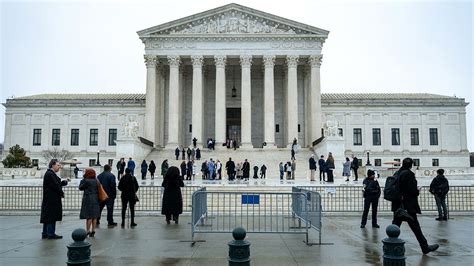
Ferguson explained that he had previously held firm on Maryland’s 7-1 map, saying, “I wasn’t willing to gamble Democratic seats on a legal fight we could lose.” He added, “Now, the rules have changed. The Supreme Court gutted the Voting Rights Act, and Southern legislatures are already using that ruling to wipe out minority districts.”
Earlier this month, Governor Wes Moore had been a strong advocate for redistricting, pushing for the state to join other Democratic-controlled states in responding to new maps that favor Republicans. Moore asserted, “They want us to sit down and be quiet about it. Absolutely not. I’m never going to stop fighting for our democracy and anyone who’s waiting for me to stop fighting for democracy, they are going to be waiting a h of a long time. I believe in this moment. We’ve got to understand what is happening. We are watching a federal administration that is trying to rig and steal elections.”
In August 2025, Moore ordered Maryland’s map to be redrawn after Republican-led states ordered maps redrawn in a partisan manner. A new map drawn by the Governor’s Redistricting Advisory Commission reshaped the 1st and 3rd congressional districts in a way that could put Maryland’s sole Republican member of Congress at a disadvantage.
The House of Delegates has since passed redistricting bill (House Bill 488), but it is currently languishing in the Senate Rules Committee.
Ferguson had publicly disagreed with the governor’s stance on redistricting, opting not to take up the issue during the legislative session. Ferguson was notably absent from Moore’s recent list of election endorsements, underscoring the division within the party.
Rep. Andy Harris, who has represented Maryland’s 1st Congressional District since 2011, is the lone Republican in the state’s congressional delegation.
Ferguson stated: “Maryland must respond as the ground shifts under us. I’m in active conversations with my caucus about a special session and constitutional amendment to address the 2022 Maryland court redistricting decision and new U.S. Supreme Court VRA decision, with the aim of putting this before Maryland voters in November.”
“We’ll meet after the primary to prepare — we must do this right, without risking what we have already won,” he added.
Ferguson wants to draft a ballot initiative to place in front of Maryland voters this November that would alter the state’s Constitution and protect the new map from court challenges. He hopes to convene the Maryland General Assembly after the June 23 primary.
Moore does not want to wait until after the primary, according to his office spokesman. The governor would rather have the legislature convene as soon as possible to enact a new map and then ask voters to approve it via referendum this November. He is also open to including a state constitutional amendment in that process.
“I’m glad to hear the Senate president is willing to have a conversation about it,” Moore said at a news event on Friday. “I think it needs to include the maps.”
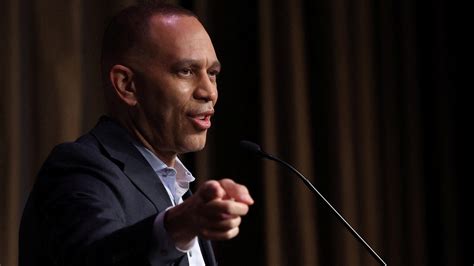
For Ferguson, even agreeing to draw new maps for 2028 represents a shift in attitude. At the height of redistricting disputes this spring, Ferguson’s opposition to redrawing Maryland’s maps ahead of this year’s elections flummoxed party leaders from Representative Hakeem Jeffries, the Democratic leader in the House, to Governor Moore.